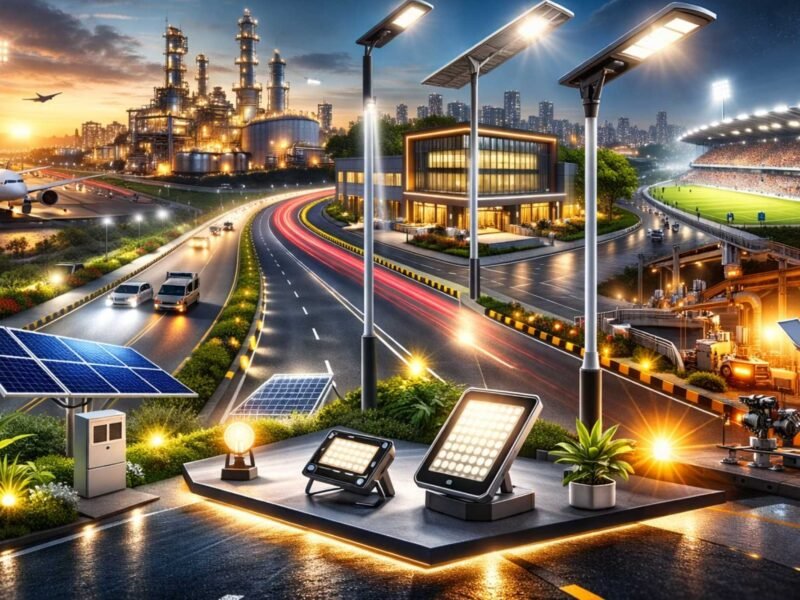


Walk through any growing Indian city after sunset – Ahmedabad, Pune, Jaipur, Bengaluru – and you’ll notice something changing. Roads are brighter, factories are more energy-efficient, and commercial buildings look modern without burning through electricity.
But behind that transformation lies a problem most businesses, municipalities, and developers quietly struggle with:
-
Rising energy costs
-
Sustainability pressure from regulators and customers
-
Outdated lighting infrastructure that wastes power
-
Limited awareness of modern lighting technologies
Lighting may seem like a small operational detail, yet it directly impacts operational expenses, carbon footprint, employee productivity, and urban safety. In India, where energy demand continues to surge, adopting smarter lighting systems isn’t just an upgrade – it’s becoming essential.
That’s where forward-thinking innovators like Nessa are shaping the shift. As one of the emerging Led Light Manufacturers India, the company is focusing on solutions that combine performance, efficiency, and environmental responsibility – helping organizations move toward truly sustainable living and infrastructure.
In this article, we’ll explore how modern lighting innovations are redefining sustainability in India and how solutions from Nessa align with real-world business and urban needs.
The Growing Demand for Sustainable Lighting in India
India’s energy landscape is evolving rapidly. Industrial expansion, smart city initiatives, and infrastructure growth are increasing electricity demand at an unprecedented rate. Traditional lighting systems contribute heavily to unnecessary consumption.
Why sustainability in lighting matters now
-
Electricity costs continue to rise for industries and commercial properties
-
Government initiatives encourage energy conservation
-
Businesses are prioritizing ESG goals
-
Urban infrastructure requires scalable lighting solutions
-
Carbon reduction targets are becoming operational benchmarks
What makes lighting sustainable?
Sustainable lighting uses technologies such as LEDs, solar-powered systems, dimming controls, and intelligent automation to reduce energy consumption, extend product lifespan, and minimize environmental impact.
Modern Energy Efficient Led Lighting and solar-powered systems address these concerns by delivering higher brightness with lower power usage and reduced maintenance – making them ideal for India’s evolving infrastructure needs.
Understanding the Evolution of LED Lighting Solutions
Just a decade ago, LEDs were considered expensive alternatives. Today, they’re foundational to modern infrastructure planning.
What has changed?
-
Manufacturing innovation has reduced costs
-
Performance efficiency has improved
-
Integration with smart controls is now standard
-
Lifespan exceeds traditional lighting by years
Organizations exploring Led Lighting Companies in India now evaluate far more than just illumination – they assess lifecycle cost, adaptability, and sustainability impact.
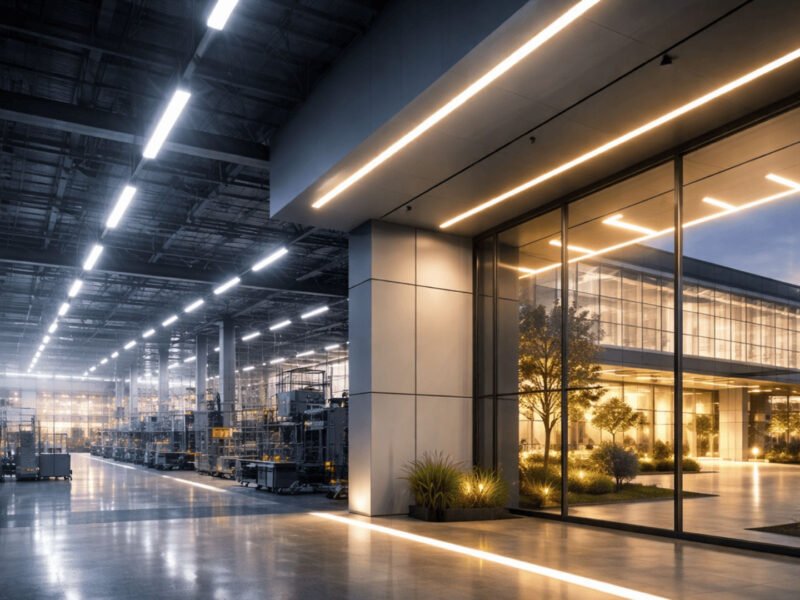
A manufacturing facility upgrading from traditional fixtures to Industrial Led Lighting can reduce lighting energy consumption by up to 50–70%, while also improving worker visibility and safety. This directly impacts operational efficiency and insurance compliance metrics.
This shift explains why businesses increasingly partner with experienced Industrial lighting Manufacturer providers rather than purchasing commodity lighting products.
Solar-Powered Lighting and the Future of Urban Infrastructure
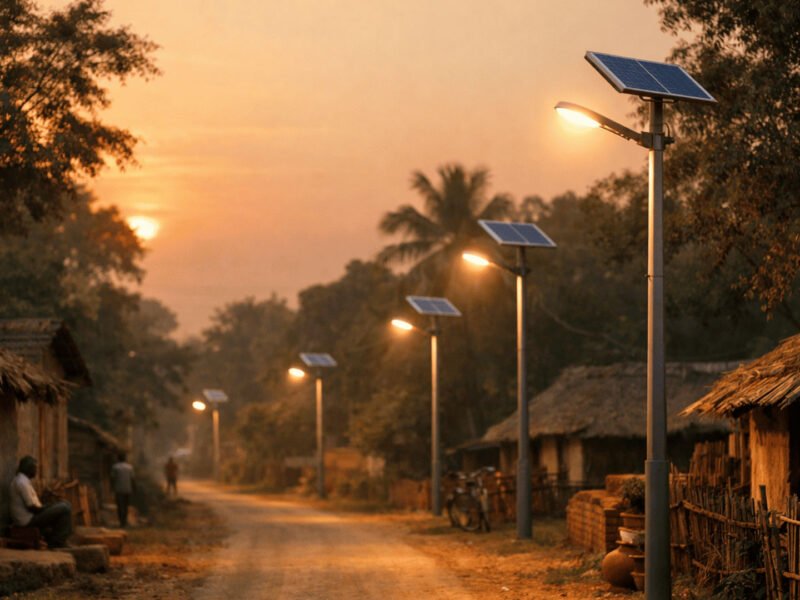
Street lighting represents one of the largest ongoing power expenditures for municipalities. Solar-powered alternatives are reshaping how cities approach illumination.
The rise of solar street solutions
Innovations from modern Solar Street Light Manufacturer providers include:
-
Battery optimization for extended operation
-
Smart energy storage
-
Automated dusk-to-dawn operation
-
Remote monitoring capability
These advancements make smart solar lights practical for both urban and rural deployment.
Why are solar street lights important in India?
Solar street lights reduce dependence on grid electricity, lower operational costs, enable lighting in remote regions, and support sustainability initiatives aligned with national energy goals.
Working with a reliable Street Light manufacturer ensures consistency in performance, especially where infrastructure conditions vary widely.
Industrial and Commercial Lighting: Where Efficiency Meets Productivity
Lighting impacts productivity more than most businesses realize. In factories, poor illumination can cause fatigue or errors. In offices or retail spaces, it affects mood, brand perception, and customer experience.
Industrial applications
Modern Industrial Led Lighting solutions are designed for:
-
High-ceiling environments
-
Heat and dust resistance
-
Uniform brightness distribution
-
Reduced maintenance downtime
Choosing an experienced Industrial lighting Manufacturer ensures products are engineered for real industrial conditions rather than generic use.
Commercial indoor environments
Businesses upgrading Commercial Indoor Lighting often seek:
-
Balanced brightness
-
Visual comfort
-
Energy savings
-
Modern aesthetic appeal
LED-based solutions outperform traditional fixtures while enabling features such as Dimmable Lights, allowing facilities to control energy usage dynamically.
Outdoor commercial spaces
Parking lots, campuses, and building exteriors rely on Commercial Outdoor Lighting that prioritizes durability, visibility, and security. Efficient systems also enhance brand image – something often overlooked by property developers.
Architectural Lighting and Experience-Driven Design
Lighting is no longer purely functional. It’s experiential.
Developers and designers now integrate Architectural Led Lighting to enhance visual identity and spatial atmosphere.
Applications include
-
Facade highlights
-
Ambient building accents
-
Hospitality environments
-
Retail branding
What is architectural LED lighting used for?
Architectural LED lighting enhances building aesthetics and user experience through controlled illumination, accent lighting, and design-driven light placement that highlights structural features.
Forward-thinking Innovative Lighting Solutions providers understand both engineering and design, ensuring performance aligns with visual goals.
How Innovative Lighting Drives Long-Term Cost Savings
Decision-makers often focus on upfront cost, but lighting should be evaluated through lifecycle economics.
Key cost factors to consider
-
Energy consumption
-
Maintenance frequency
-
Replacement cycles
-
Downtime impact
Do LED lighting systems save money?
Yes. LED systems reduce electricity usage, require less maintenance, and last significantly longer than conventional lighting, lowering total operational costs over time.
Businesses partnering with reliable Led Light Manufacturers India can better evaluate ROI rather than making short-term procurement decisions.
Buyer Decision Framework: Choosing the Right Lighting Partner
Selecting among Led Lighting Companies in India requires a structured approach.
Questions decision-makers should ask
-
Does the manufacturer provide sector-specific solutions?
-
Are products certified and tested for Indian conditions?
-
Is customization available?
-
Do they support scalability?
-
Can they guide implementation strategy?
Practical evaluation checklist
-
Portfolio range
-
Manufacturing credibility
-
Industry experience
-
Technical support
-
Sustainability focus
Organizations evaluating Innovative Lighting Solutions should prioritize long-term partnership value over lowest-cost sourcing.
The Role of Nessa in Advancing Sustainable Lighting
In a market crowded with generic suppliers, Nessa positions itself as a solution-focused provider delivering:
-
Energy Efficient Led Lighting across industries
-
Solar-based infrastructure support
-
Indoor and outdoor commercial solutions
-
Industrial-grade lighting systems
-
Architectural enhancement options
By operating within the ecosystem of modern Led Light Manufacturers India, Nessa contributes to India’s transition toward efficient infrastructure and sustainable development.
Practical use-case alignment
-
Infrastructure planners upgrading municipal lighting
-
Developers seeking sustainable commercial design
-
Manufacturers optimizing factory efficiency
-
Businesses modernizing workspace illumination
Organizations exploring strategic lighting upgrades can learn more or initiate consultation through the company’s website: Nessa
Frequently Asked Questions
What are the benefits of working with LED light manufacturers in India?
Manufacturers offer locally optimized solutions suited for climate, voltage conditions, and regulatory requirements, improving performance reliability and service support.
How do smart solar lights work?
They capture sunlight through photovoltaic panels, store energy in batteries, and use automated sensors or controllers to illuminate areas efficiently after sunset.
What industries benefit most from industrial LED lighting?
Manufacturing, logistics, warehousing, and heavy engineering industries benefit significantly due to high energy usage and operational lighting requirements.
Are dimmable lights useful for commercial spaces?
Yes. They allow businesses to adjust brightness based on usage patterns, reducing energy consumption while improving visual comfort.
Why should businesses upgrade to energy-efficient LED lighting?
Upgrades reduce operational costs, support sustainability goals, enhance productivity, and improve long-term infrastructure value.
How do innovative lighting solutions support smart cities?
They enable automation, monitoring, and reduced energy demand, helping cities scale infrastructure responsibly while maintaining safety and efficiency.
Moving Toward a Brighter, Sustainable Future
India’s journey toward sustainability isn’t driven by massive infrastructure shifts alone – it’s shaped by thousands of smart operational decisions made by businesses, municipalities, and developers every day.
Lighting stands at the intersection of cost efficiency, environmental responsibility, and human experience. Whether it’s industrial performance, architectural beauty, or solar-powered urban safety, modern solutions are transforming how spaces function after sunset.
Organizations that treat lighting as a strategic investment – rather than a utility purchase – position themselves ahead in operational resilience and sustainability.
If your business or project is evaluating smarter illumination strategies, exploring tailored Innovative Lighting Solutions from experienced providers like Nessa can be a meaningful next step. You can reach out through their website to discuss requirements and discover options suited to your application.
Sustainable living isn’t a distant goal – it’s being built today, one efficient light at a time.