
If you have travelled through cities like Ahmedabad, Surat, Pune, or Indore in recent years, you may have noticed a quiet transformation. Old yellow sodium lamps are disappearing. In their place, sleek, bright LED street lights are lighting up roads, highways, and public spaces.
This change is not accidental. Across India, LED street lights have become a mandatory requirement in Smart City projects. Municipal corporations, urban planners, and infrastructure consultants are choosing LEDs by design, not by trend.
But why exactly are LED street lights mandatory? What problem are they solving? And how do they fit into India’s long-term urban vision?
Let’s explore the real reasons behind this shift, backed by on-ground use cases, government objectives, and expert insights from the lighting industry.
The Smart City Mission and the Role of LED Street Lights
India’s Smart Cities Mission was launched to make urban spaces more livable, sustainable, and efficient. The focus is not only on technology, but also on responsible use of energy, public safety, and long-term cost savings.
Street lighting plays a bigger role than most people realise. It affects visibility, traffic safety, crime prevention, energy consumption, and even public perception of a city.
Traditional street lights consume high electricity, require frequent maintenance, and offer limited control. LED street lights solve these issues at scale, which is why they are now embedded into Smart City planning guidelines.
In cities like Ahmedabad, where rapid urban expansion meets industrial growth, switching to LED street lighting has become both a necessity and a responsibility.
Why LED Street Lights Are Mandatory, Not Optional
Energy Efficiency Is No Longer a Choice
India is one of the world’s largest energy consumers. Urban local bodies are under constant pressure to reduce electricity bills without compromising public services.
LED street lights consume up to 50–60% less power compared to conventional lighting. This is not a marketing claim. It is a measurable, on-site result seen across Indian municipalities.
For example, when cities replace 250W sodium lamps with 90W LED street lights, the reduction in power load is immediate. Over thousands of poles, this translates into massive savings.
Smart City projects are evaluated on sustainability metrics. Energy-efficient LED lighting directly contributes to meeting those benchmarks.
Lower Maintenance for Cash-Strapped Municipalities
Maintenance is a silent budget killer. Traditional street lights fail often. Ballasts burn out. Lamps flicker. Replacement cycles are short.
LED street lights, when sourced from reliable LED light manufacturers in India, have a lifespan of 50,000 hours or more. This means fewer failures, fewer maintenance crews, and lower annual expenditure.
In cities like Ahmedabad, where road networks are extensive, reduced maintenance is a strong reason LEDs are preferred and mandated.
Better Road Safety and Visibility
Public safety is a core pillar of Smart City planning. Poor lighting leads to accidents, unsafe streets, and reduced night-time mobility.
LED street lights offer uniform illumination. There are fewer dark spots. Colour rendering is better. Drivers can see obstacles clearly. Pedestrians feel safer.
This is particularly important on highways, industrial zones, and commercial outdoor lighting areas where traffic density is high.
Smart Cities cannot afford poor visibility. LED street lights deliver consistent lighting that meets Indian Road Congress standards.
Smart Lighting for Smart Cities
Integration with Smart Controls
Modern Smart City projects go beyond just installing lights. They integrate systems.
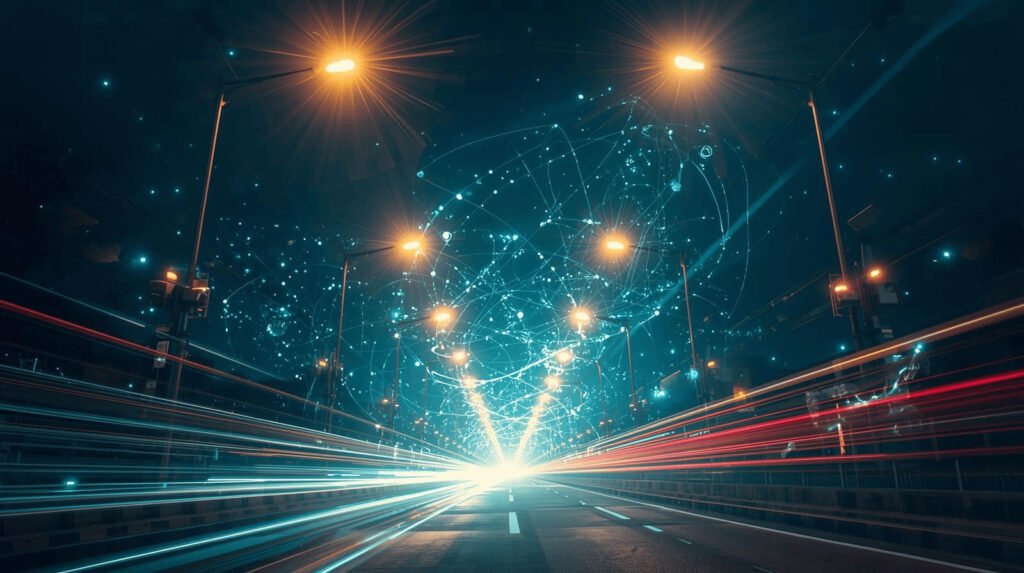
LED street lights are compatible with smart controls like dimming, remote monitoring, and automated switching. Cities can adjust brightness based on traffic flow or time of night.
This is where smart solar lights and smart LED street lights play a critical role. They align with IoT-based city management systems.
Traditional lighting cannot support such integration. LEDs can.
Solar Street Lights and Hybrid Models
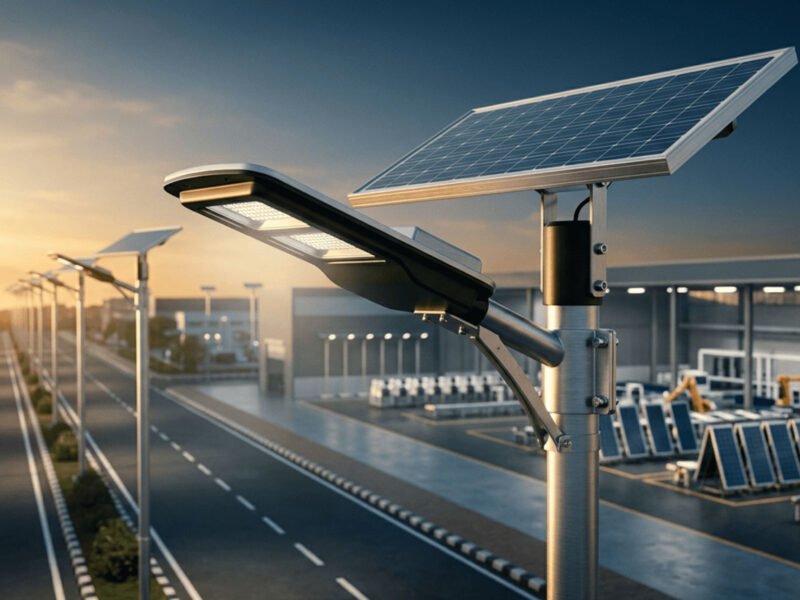
India receives abundant sunlight. In regions with unstable grid supply, solar street lights are a practical solution.
Many Smart City zones now use a hybrid approach. Grid-connected LED street lights are used in dense urban areas, while solar street light systems are deployed in outskirts, highways, and rural-urban corridors.
A reliable solar street light manufacturer ensures consistent performance even during monsoons or cloudy conditions.
This flexibility makes LED-based systems ideal for diverse Indian conditions.
Economic Impact: Saving Public Money at Scale
When cities upgrade street lighting, they are not spending. They are investing.
The upfront cost of LED street lights may appear higher. But over five to seven years, the savings in electricity and maintenance far exceed the initial investment.
Several Indian cities have reported payback periods of under three years after switching to LED street lighting.
For taxpayers, this means public funds are used efficiently. For policymakers, it demonstrates responsible governance.
This economic logic is one of the strongest reasons LEDs are mandatory in government-led urban projects.
Environmental Responsibility and Climate Goals
India has committed to reducing carbon emissions and improving energy efficiency.
Street lighting accounts for a significant portion of urban electricity consumption. Switching to LED lighting directly reduces carbon footprint.
Smart City projects are evaluated on environmental impact. LED street lights help cities align with national and global climate goals.
For lighting companies focused on innovative lighting solutions, sustainability is no longer optional. It is central to product design and deployment.
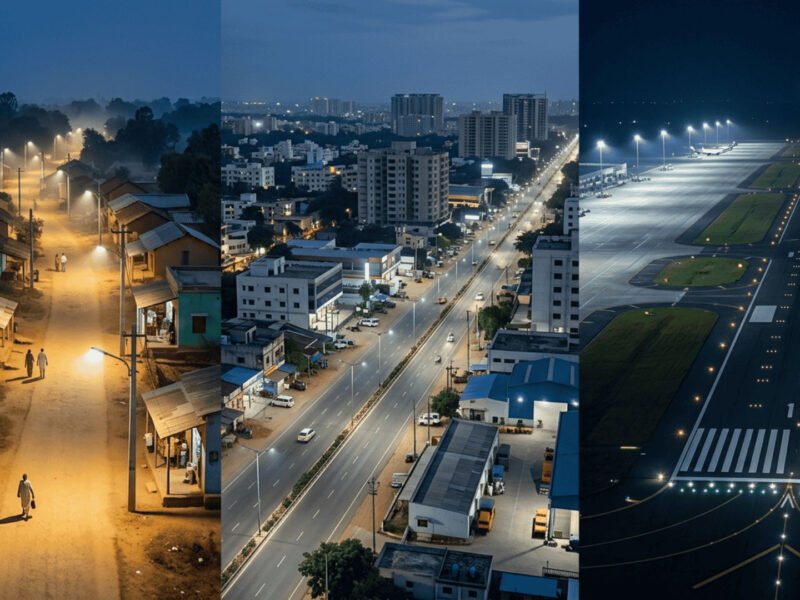
Where LED Street Lights Are Used in Smart City Projects
LED street lights are not limited to main roads.
They are used across:
• City roads and highways
• Residential streets
• Industrial estates
• Commercial zones
• Parking areas
• Public parks and walkways
In industrial areas, industrial LED lighting solutions are preferred for durability and higher lumen output.
In heritage or premium zones, is used to maintain aesthetics while ensuring efficiency.
Commercial outdoor lighting also benefits from LED systems that balance brightness with visual comfort.
Why Local Manufacturing Matters
India’s Smart City Mission strongly encourages Make in India.
Cities prefer working with established LED lighting companies in India that understand local regulations, weather conditions, and project execution challenges.
Local manufacturers can offer faster support, better customization, and long-term service reliability.
For example, a street light manufacturer based in Ahmedabad can quickly respond to municipal needs across Gujarat, ensuring smoother project execution.
This is why cities prefer experienced LED light manufacturers in India over generic imports.
How Businesses Benefit from the Same Shift
The benefits of LED street lighting are not limited to government projects.
Industrial parks, SEZs, commercial campuses, and private townships are also adopting LED street lights.
Businesses reduce operating costs. Premises look modern. Safety improves.
Commercial indoor lighting and commercial outdoor lighting systems often follow the same LED-first approach for consistency and efficiency.
This creates demand for end-to-end lighting partners who can deliver both public and private lighting solutions.
Choosing the Right LED Street Light Partner
Not all LED street lights are equal.
For Smart City or large-scale projects, decision-makers look for:
• Proven product performance
• Compliance with Indian standards
• Experience in large installations
• Strong after-sales support
Lighting partners offering energy-efficient LED lighting with a focus on innovation and reliability stand out.
Companies like Nessa, based in Ahmedabad, represent a new generation of Indian lighting brands. They combine manufacturing expertise with practical, real-world application knowledge across India and global markets.
Their portfolio spans LED street lights, solar street lighting, industrial LED lighting, architectural lighting, and commercial lighting solutions, making them suitable partners for diverse project needs.
When and Where LED Street Lights Make the Most Sense
LED street lights are ideal:
• When cities want long-term savings
• When energy efficiency is a priority
• When smart controls are required
• When maintenance budgets are limited
They work best in urban roads, highways, industrial areas, and public spaces where consistent lighting is critical.
In Indian cities with high traffic density and growing populations, LED street lights are not just suitable. They are essential.
Expert Insight: The Future of Urban Lighting in India
Urban lighting is evolving.
The future lies in adaptive lighting, solar integration, and data-driven control systems. LED street lights form the foundation of this future.
As Smart Cities expand and new urban zones emerge, LED lighting will remain the default standard.
Manufacturers who focus on innovation, durability, and sustainability will lead this transition.
Frequently Asked Questions
1. Why are LED street lights mandatory in Smart City projects in India?
LED street lights are mandatory because they reduce energy consumption, lower maintenance costs, improve public safety, and support sustainability goals under the Smart Cities Mission.
2. Do LED street lights really save electricity?
Yes. LED street lights consume up to 60% less electricity than traditional lighting, leading to significant savings for municipalities and businesses.
3. Are solar street lights part of Smart City projects?
Yes. Solar street lights and smart solar lights are widely used, especially in areas with limited grid access or for sustainable infrastructure development.
4. How long do LED street lights last in Indian conditions?
High-quality LED street lights can last over 50,000 hours, even in Indian weather conditions, when sourced from reliable manufacturers.
5. Can private projects use the same LED street lighting systems?
Absolutely. Industrial zones, commercial campuses, and residential projects increasingly use LED street lights for cost savings and better lighting quality.
The Smarter Choice for India’s Next-Generation Urban Infrastructure
LED street lights are mandatory in Smart City projects because they solve real problems. They save energy. They reduce costs. They improve safety. They support sustainability.
For India’s cities, this is not a trend. It is a long-term infrastructure decision.
As urban India grows, the demand for reliable, energy-efficient, and smart lighting solutions will only increase. Partnering with experienced lighting manufacturers who understand both technology and local needs makes all the difference.
Smart cities need smart lighting. And LED street lights are lighting the way forward.