
If you live in India — especially in fast-growing cities like Ahmedabad, Surat, Pune, or even smaller developing towns — you might have noticed a major change.
Street lights are getting smarter.
And sometimes, they don’t even have electrical wiring.
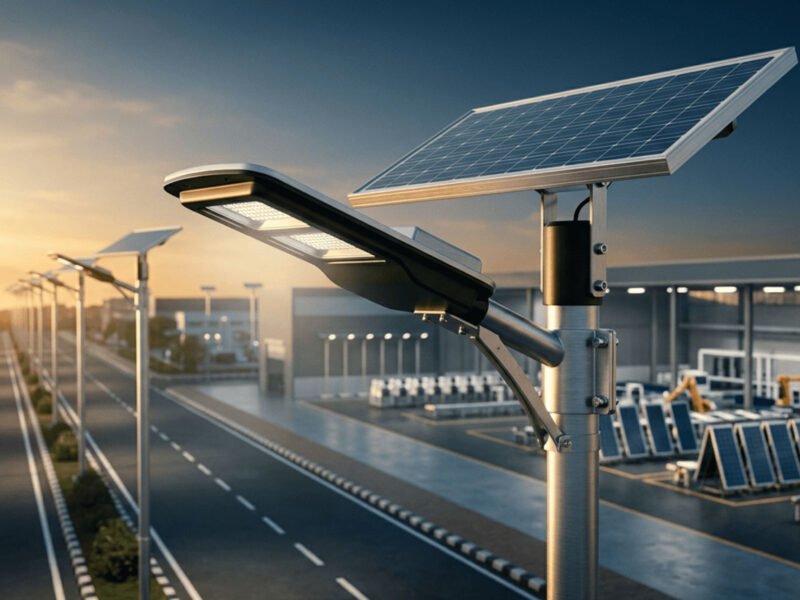
Those poles with sleek LED fixtures and a solar panel on top?
Those are Solar Smart Street Lights — and they are transforming how our country lights up highways, societies, rural areas, and even remote villages where electricity supply is unstable.
In this blog, I’ll explain:
- What exactly a Solar Smart Street Light is
- How it works (in simple, everyday language)
- Why government, industries, and even private townships are shifting to it
- Where it is most used in India
- Real-world examples (including Gujarat & rural India projects)
Let’s start with the basics.
-
What Is a Solar Smart Street Light?
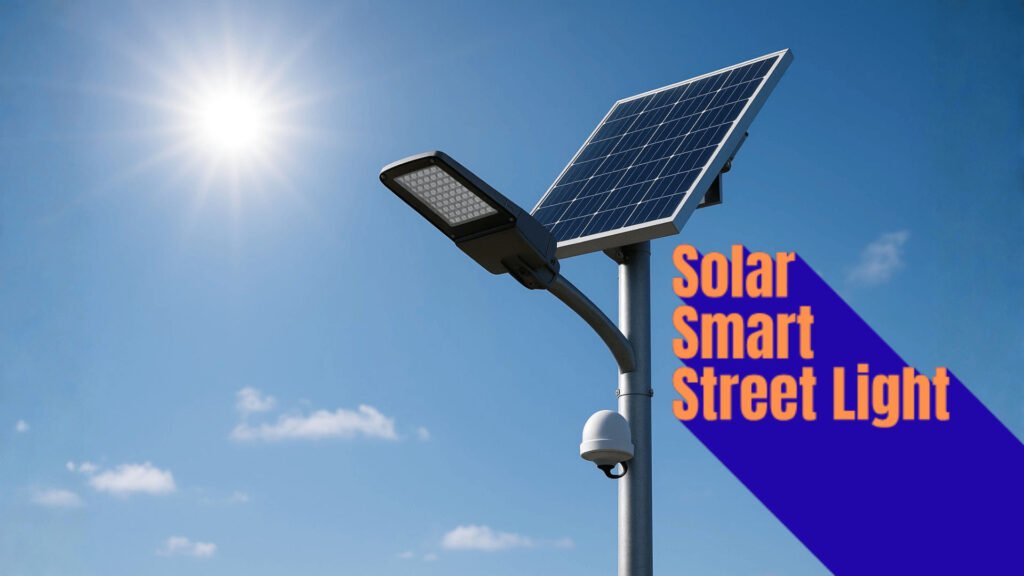
- A Solar Smart Street Light is a street light that works using solar energy instead of traditional electricity.
It includes: - Solar panel (captures sunlight)
- Battery (stores energy)
- LED light fixture (uses energy efficiently)
- Smart controller (brain of the system)
Unlike normal street lights, smart solar models don’t need underground wiring, transformers, or electricity bills.
- They automatically:
- – Turn ON at sunset
– Turn OFF at sunrise
– Adjust brightness based on movement or pre-programmed settings - Think of it as “street lighting that pays for itself” because once installed, it runs on free energy — sunlight.
-
How Does a Solar Smart Street Light Work?
- Here’s the working process explained in simple steps:
- Step 1: Solar panel absorbs sunlight
- During the day, the solar panel captures sunlight and converts it into DC power.
- Step 2: Battery stores electricity
- This electricity is stored in the lithium or LiFePO4 battery (depending on the model).
These batteries are long-lasting and require no maintenance. - Step 3: Smart controller manages energy
- The smart controller decides:
- when to store energy
- when to use it
- how much brightness is required
It’s like the brain of the street light.
- Step 4: LED turns on automatically
- At sunset, the light turns ON automatically.
No switches, no manual operation. - At sunrise, it automatically turns OFF.
- Bonus Smart Features (depending on model)
- Motion sensing — increases brightness when movement is detected
Remote monitoring — status check using an app/dashboard
Dimming control — 100% brightness only when needed
This reduces power waste and increases backup hours at night.
-
Why Are Solar Smart Street Lights Becoming Popular in India?
- Because they solve real problems.
- Traditional Street Lights:
- Need wiring and electrical infrastructure
- Require trenching and road digging
- High electricity bill every month
- High maintenance cost
Solar Smart Street Lights:
- No wiring, no electricity usage
- Installed within hours
- Zero bill for the next 10–12 years
- Works even during power cuts
- Use Cases in India
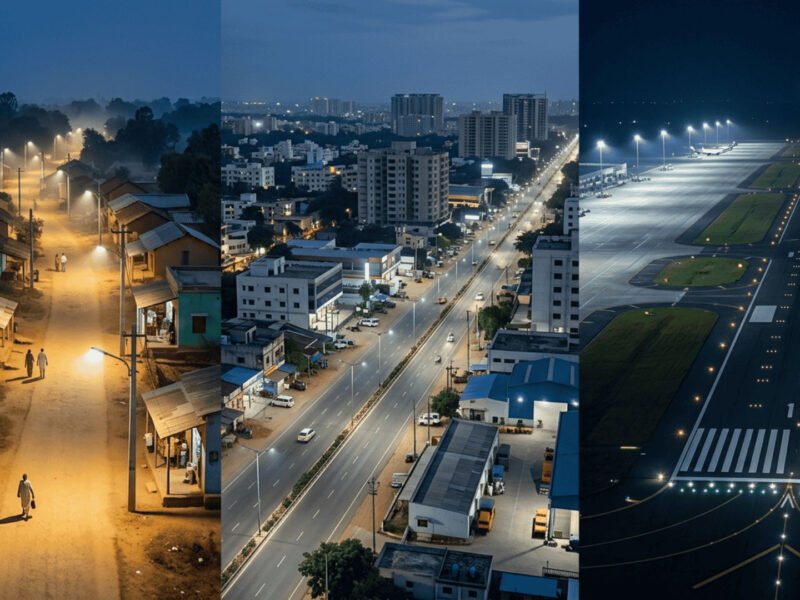
- Solar smart street lights are widely used across:
- Smart cities
- Industrial and SEZ zones
Private societies and GIDC areas
Highways, toll plazas, parking lots
Airports and stadiums
Rural villages and remote development zonesThe biggest adoption is happening in rural India.
- Many villages in Gujarat, Rajasthan, and Uttar Pradesh did not have stable power supply.
Solar street lights have improved: - Safety during night
Late-evening activity in community areas
Women’s safety and mobility -
Where Nessa Comes In
- While many companies just supply lights, Nessa designs & manufactures solutions based on location requirements.
- They serve:
- 29 states in India
20+ global countries (including South Africa, Kenya, Oman, Finland, USA)Nessa doesn’t sell “boxed products.”
They customize lighting depending on site conditions — highways, hazardous areas, stadiums, airports, etc. - That is why government departments, corporates, and infrastructure developers choose them.
-
Types of Solar Street Lights
- When people say “solar street light”, they actually mean different types:
- 1. All-in-One Solar Street Light
- Panel + battery + LED fixture in one unit
Ideal for societies, parks, rural area lighting - 2. Solar Smart Street Light (with smart controller)
- Adjustable brightness
Motion sensing available
App/remote monitoring (model-specific)3. Solar High Mast Light
- Used for highways, stadiums, toll plazas, airports, parking zones
Single pole, multi-light arrangementIf your requirement is bigger area illumination, solar high mast lighting is better.
-
Highway Project
- When highways in Rajasthan were being upgraded under PPP projects, they needed street lighting across long stretches of roads.
- Challenges:
- No electrical grid available
Massive trenching costs
High monthly bills if connected to the gridSolution:
- Solar high mast smart lighting was installed. No wiring, no billing.
- Outcome:
- Installation completed 60% faster
Street remained illuminated every night with consistent output
-
Village Lighting
-
In a village near Surendranagar, streets had limited visibility after 7 PM.
-
After installing solar LED lights:
-
Shops stayed open longer
Girls and women felt safer
Community events continued during late eveningVillagers often say: “Ab raat me bhi gaam zinda lagta hai.”
-
Stadium Smart Lighting
-
A sports academy in Ahmedabad installed smart solar high mast lighting.
-
Benefits:
-
Even light distribution
No glare
No monthly electricity billRemote monitoring through the dashboard
- Key Advantages of Solar Smart Street Lights
-
Zero electricity cost for years
Extremely low maintenance
Quick installation (no civil digging)
Works during power cuts
Motion-sensing saves energy
Environment-friendly (reduces CO₂) -
How to Choose the Right Solar Street Light?
-
Selection depends on:
-
Height of pole (6–12 m)
Required brightness (wattage & lumen output)
Location (rural, urban, highway, park, industrial)
Autonomy hours (backup during cloudy days)A professional manufacturer analyzes:
-
Lux levels
Road width
Pole spacing
Environmental conditions (dust, humidity, corrosive environment)Nessa specializes in custom-designed solutions, especially for complex environments like refineries, airports, and hazardous areas.
-
FAQ
-
Q.1 How much area can a Solar Smart Street Light cover?
-
A.2 It depends on wattage and pole height.
A 30W–60W light on a standard pole can illuminate residential lanes or small streets. For highways or stadiums, solar high masts are used. -
Q.2 How long do Solar Smart Street Lights last?
-
A.2
-
Solar panel: 20–25 years
Battery: 5–7 years (LiFePO4)
LED: 50,000+ hours -
Q.3 Do they work during monsoon?
-
A.3 Yes. Batteries are sized to offer backup for multiple cloudy days.
-
Q.4 Are they expensive?
-
A.4 Initial cost is higher than normal street lights, but after that:
-
Zero electricity bill
Zero wiring expense
Almost no maintenanceTotal long-term cost is much lower.
-
Final Thoughts
-
Solar Smart Street Lights are not just a trend.
They are a solution India truly needs — especially in areas where wiring is expensive or electricity supply is inconsistent. -
They are:
-
Eco-friendly
Economical
Reliable
Future-readyFrom highways to rural villages, they bring light, safety, and progress.
-
If you are planning street lighting and want a solution that lasts for years with zero running cost, consider reaching out to a professional manufacturer.
-
Nessa — based in Ahmedabad — designs and manufactures customized solar lighting solutions and exports to 20+ countries.