
India is changing the way it lights its streets. From smart cities and highways to rural roads and industrial zones, solar street lighting is no longer a future idea. It is a present-day decision that affects safety, budgets, and sustainability for years.
Yet, choosing the right Solar Street Light Manufacturer is not simple. Many buyers focus only on price. Later, they face poor lighting, battery failures, weak service support, or lights that stop working after one monsoon season.
If you are a municipality officer, EPC contractor, infrastructure developer, or private township planner, this guide is written for you. It explains the real questions you must ask before finalising a solar street light partner in India, especially in regions like Gujarat and cities like Ahmedabad.
These are not technical-only questions. They are practical, buyer-focused questions that experienced project managers ask before signing a purchase order.
1. Are You a Manufacturer or Just a Supplier?
This is the first and most important question.
Many companies in India call themselves manufacturers, but they only assemble parts sourced from different vendors. Some are pure traders. This directly impacts quality, warranty accountability, and long-term service.
A true Street Light manufacturer controls design, LED optics, driver quality, battery integration, and testing under one roof. When issues arise, responsibility is clear.
For example, several urban local bodies in Gujarat have faced delays because the supplier depended on third-party factories. In contrast, manufacturers with in-house facilities resolved issues faster.
If a company designs and builds its products internally, it usually means better consistency and stronger after-sales support.
2. Are the Solar Street Lights Designed for Indian Conditions?
India’s climate is not forgiving.
High temperatures in Rajasthan and Gujarat. Coastal humidity in Maharashtra. Heavy rains during monsoons. Dust exposure on highways and rural roads.
Ask clearly if the solar street lights are engineered for Indian environmental conditions, not copied from European or Chinese designs.
A well-designed Solar Smart Street Light should handle:
- High ambient temperatures without battery damage
- Continuous dust exposure
- Heavy rainfall and water logging
- Voltage fluctuations in hybrid systems
Manufacturers with field experience across Indian states understand these realities better than catalog-only sellers.
3. What Type of Solar Street Light Do You Offer?
Not all solar street lights are the same.
Before buying, understand which configuration suits your project.
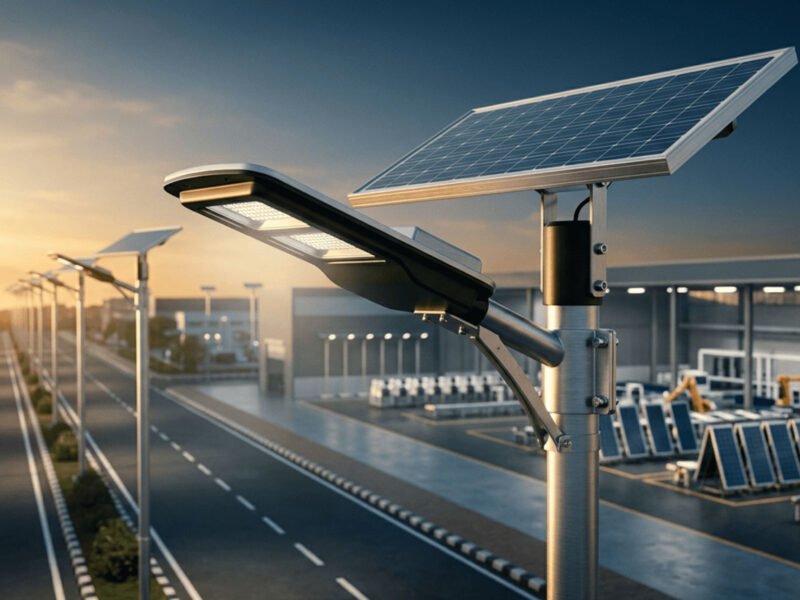
A Semi Integrated Street Light keeps the solar panel separate but integrates battery and electronics inside the luminaire. This works well for highways and areas where panel tilt needs flexibility.
Fully integrated models look sleek and are popular in smart city projects, but they may not suit all locations.
Ask the manufacturer why they recommend a specific type. A knowledgeable partner explains trade-offs instead of pushing one design everywhere.
4. What Is the Actual LED Efficiency and Light Output?
Many brochures mention wattage. Wattage alone means nothing.
The real question is how much usable light reaches the road.
Ask about lumens per watt, optical lens design, and light distribution patterns. Poor optics create bright spots under poles and dark areas between them.
Energy Efficient LED Lighting focuses on uniform illumination, not glare.
Experienced LED Light Manufacturers India test beam angles, pole spacing, and road width before recommending wattage. This reduces overdesign and saves cost over time.
5. How Reliable Is the Battery System?
The battery is the heart of any solar street light.
Ask which battery chemistry is used and why. Also ask about charge-discharge cycles and real-world lifespan.
Low-quality batteries fail silently. Lights may work for six months and then fade slowly, creating safety risks.
For long-term projects, battery selection matters more than panel size. Reliable manufacturers share battery test data and explain replacement planning clearly.
6. Do You Offer RMS Remote Monitoring Systems?
Modern solar street lighting is no longer manual.
RMS remote monitoring systems allow operators to track performance from a dashboard. You can see battery health, charging status, light failure alerts, and energy usage remotely.
This is critical for smart cities, highways, and large township projects where manual inspection is costly.
Ask whether RMS is optional or built-in. Also ask if the software is developed in-house or outsourced.
Manufacturers offering integrated RMS usually have stronger R&D capabilities and future-ready products.
7. Can You Share Real Project References?
Do not settle for generic testimonials.
Ask for real installations similar to your project scale. Municipal roads, highways, industrial zones, or campuses.
Reputed manufacturers can show working installations across Indian states and international markets. This proves product stability over time.
For example, solar and LED street lighting projects executed for academic institutions or overseas municipalities indicate long-term performance trust.
Seeing lights that have worked for two or three years gives confidence that marketing claims match reality.
8. What After-Sales Support Structure Do You Have?
Solar street lighting is a long-term asset. Support matters as much as product quality.
Ask about service response timelines, spare availability, and regional support coverage.
Manufacturers with presence in Gujarat and across India can respond faster than companies operating from a single location.
Clear warranty terms, trained service teams, and documented maintenance processes reduce future disputes and downtime.
This question separates serious infrastructure partners from short-term sellers.
9. Are Your Products Compliant with Indian and Global Standards?
Standards are not paperwork. They define safety and performance benchmarks.
Ask about compliance with BIS, MNRE guidelines, and relevant IEC standards. If the project is international, global certifications matter too.
Established Solar Street Light Manufacturers follow structured testing for ingress protection, surge protection, thermal performance, and mechanical strength.
Compliance ensures smoother approvals and fewer rejections during inspections.
10. Can You Customise Solutions Based on Site Needs?
Every site is different.
A village road in Kutch has different needs than a city street in Ahmedabad or a highway near Vadodara.
Ask if the manufacturer conducts site analysis or customises lighting parameters. Fixed, one-size-fits-all products often underperform.
Companies with in-house design teams adapt solutions based on road width, pole height, traffic density, and energy expectations.
Customisation is not about cost increase. It is about long-term performance and reliability.
Why These Questions Matter More Than Price
Solar street lighting projects last for years. A low upfront price can lead to high maintenance cost, public complaints, and safety risks.
Asking the right questions protects your investment and ensures the lights perform as promised.
India’s solar infrastructure growth demands manufacturers who think beyond sales and focus on engineering, reliability, and service.
Real-World Use Cases Across India
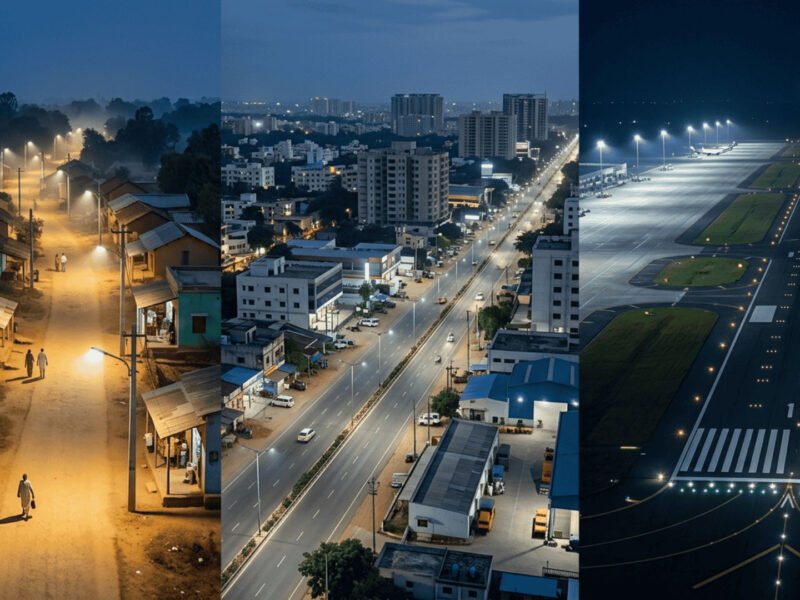
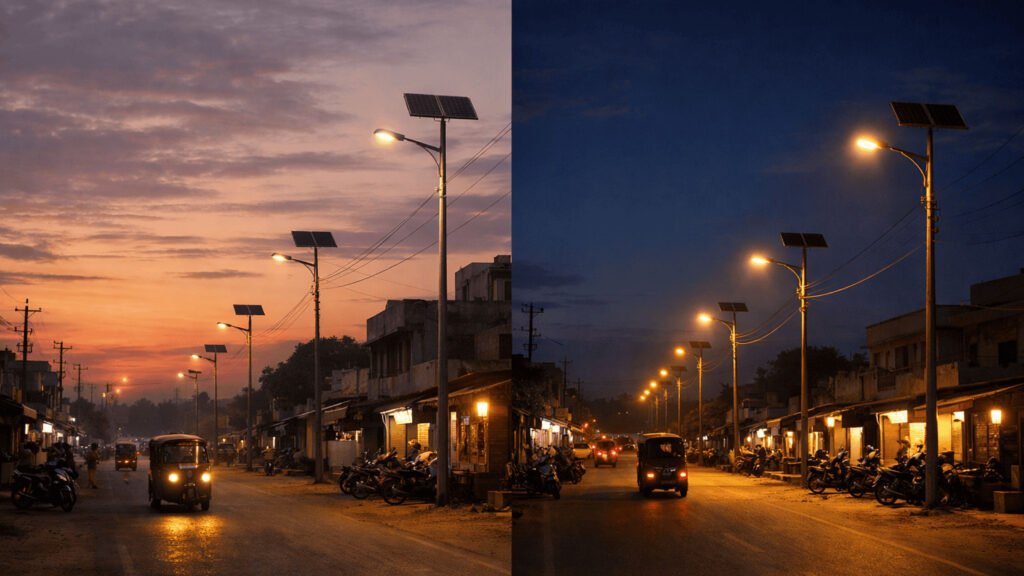
In Gujarat, solar street lighting is widely used in industrial estates, rural roads, and smart city zones. In Ahmedabad, institutions and campuses prefer LED upgrades combined with solar solutions to reduce energy bills.
Across India, highways use semi integrated solar systems with higher lumen output and monitoring systems. Rural electrification projects depend on battery reliability more than aesthetics.
Understanding these use cases helps buyers choose manufacturers who have solved similar challenges before.
How Experienced Manufacturers Approach Solar Street Lighting
Companies like Nessa, based in Ahmedabad, approach solar street lighting as an engineering solution, not a product sale.
With over 16 years of experience, in-house manufacturing, and installations across India and more than 20 countries, their focus stays on reliability, efficiency, and site-specific performance.
Rather than offering only catalog models, they design lighting systems adapted to real conditions, whether for highways, campuses, or remote locations.
This approach is why experienced buyers prioritise capability over claims.
Frequently Asked Questions
What is the ideal wattage for solar street lights in India?
It depends on road width, pole height, and required lux levels. Wattage alone should never be the deciding factor.
Are solar street lights suitable for all Indian regions?
Yes, when designed for local climate conditions and installed correctly with proper battery sizing.
What is a solar smart street light?
It is a solar street light integrated with smart controls like RMS, dimming schedules, and fault alerts.
How long do solar street lights last?
Quality systems last 7 to 10 years, with battery replacement planned during the lifecycle.
Why choose an Indian manufacturer over imported lights?
Indian manufacturers design for local conditions, provide faster service support, and ensure easier spare availability.
Lighting the Road Ahead: Choose a Partner, Not Just a Product
Choosing a solar street light provider is not about ticking boxes or chasing the lowest quote. It is about selecting a long-term partner who understands how Indian roads, weather, and communities truly function.
The right questions shift your focus from short-term savings to long-term performance. They help you build a lighting system that delivers safety, visibility, and reliability year after year, without constant repairs or surprises.
As India accelerates toward a cleaner and smarter energy future, responsible manufacturing and engineering-led solutions matter more than ever. Manufacturers who design for real conditions, test rigorously, and stand by their products make a visible difference on the ground.
When engineering expertise, proven performance, and practical design come together, the result is lighting that lasts. Partnering with experienced manufacturers like Nessa helps ensure your solar street lighting investment continues to perform long after installation, lighting the way for communities for years to come.