
Public parks are no longer just green spaces. In cities like Ahmedabad, Surat, Gandhinagar, and across India, public parks have evolved into vibrant community zones. People meet here, exercise daily, attend cultural events, and spend quality time with family. Parks are also becoming safe and active spaces during evening hours.
As park usage extends beyond daylight, lighting has become a critical part of urban planning. It is no longer only about aesthetics. Lighting now plays a key role in safety, accessibility, energy efficiency, and long-term operating costs.
This is where Solar Park Lighting Solutions emerge as a future-ready alternative. Unlike conventional grid-based lighting, solar lighting offers energy independence, lower operational costs, and reliable performance. Most importantly, it aligns perfectly with India’s growing focus on sustainability and renewable energy.
In this guide, we explore what solar park lighting solutions are, how they work in Indian conditions, where they are most effective, and why municipalities, planners, and developers are increasingly choosing them over traditional lighting systems.
Understanding Solar Park Lighting Solutions
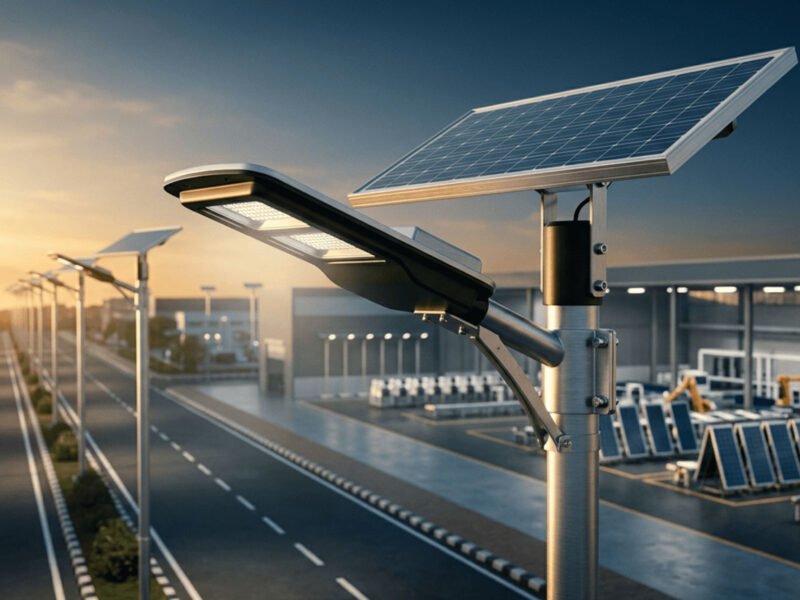
Solar Park Lighting Solutions are outdoor lighting systems designed specifically for parks and public spaces. These systems generate electricity using solar energy captured during the day and use it to illuminate areas after sunset.
They are commonly used to light park pathways, jogging tracks, gardens, seating zones, play areas, and open recreational spaces. Since they operate independently of the power grid, they eliminate the need for underground cabling or electrical connections.
This independence makes solar lighting especially suitable for public parks, riverfronts, urban gardens, and green belts, where installing conventional infrastructure can be expensive or disruptive.
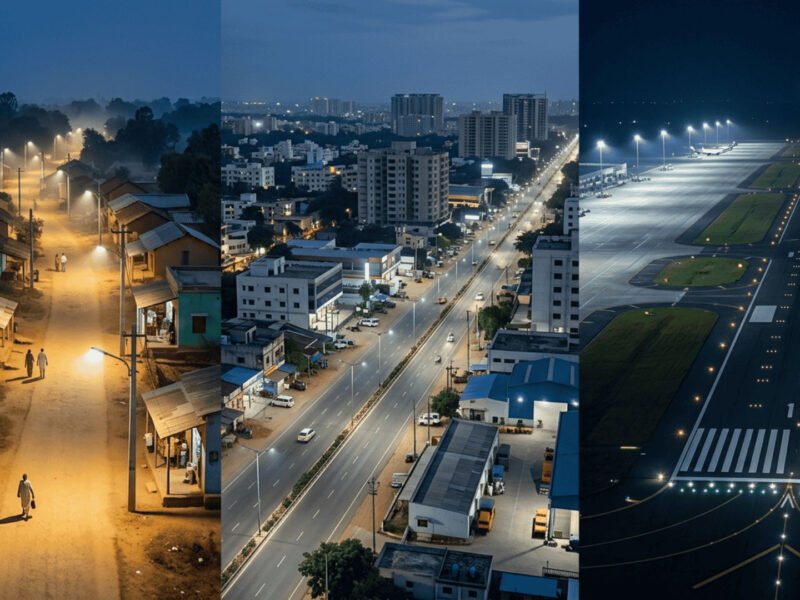
In India, solar park lighting is no longer experimental. Municipal corporations, Smart City projects, residential townships, and tourism authorities are actively adopting smart solar lights, Solar Smart Street Light systems, and high-capacity solutions from trusted Solar HighMast Manufacturers.
What makes these solutions practical is their flexibility. From compact pathway lights to high-output lighting for large open parks, modern solar technology supports a wide range of lighting requirements.
How Solar Park Lighting Works in Real Conditions
The working principle of solar park lighting is simple, but the execution requires precise engineering.
During the day, high-efficiency solar panels absorb sunlight and convert it into electricity. This energy is stored in advanced batteries, such as lithium-ion or high-capacity gel batteries, designed to perform reliably in India’s hot and dusty climate.
At dusk, built-in sensors automatically switch the lights on. At sunrise, the system turns off to conserve energy. No manual operation is required.
Modern smart solar lights take this a step further. They use intelligent controllers to adjust brightness based on movement, time of night, or ambient light levels. This ensures optimal illumination while extending battery life.
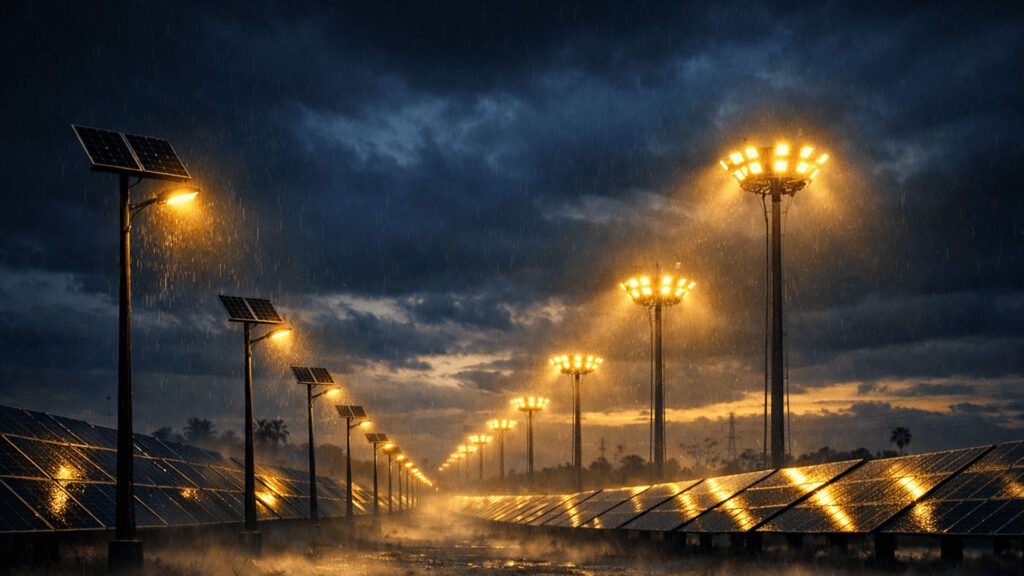
In cities like Ahmedabad, where sunlight availability is strong for most of the year, solar park lighting solutions perform consistently, even during monsoon seasons, when systems are designed and installed correctly.
Why Solar Park Lighting Is Gaining Momentum in India
India’s rapid urban growth has created a demand for infrastructure that is sustainable, cost-effective, and reliable. Public parks must remain safe, functional, and affordable to maintain.
Solar Park Lighting Solutions directly address these challenges.
First, they drastically reduce electricity costs. Once installed, operating expenses are minimal. This is a major advantage for municipalities managing multiple parks.
Second, installation is faster and cleaner. There is no trenching, no cable laying, and no damage to landscaping.
Third, solar lighting aligns with national initiatives such as the Smart Cities Mission, renewable energy adoption, and carbon footprint reduction.
Cities like Ahmedabad, which actively promote green urban development, find solar lighting a natural fit for long-term planning.
When Should Solar Park Lighting Be Considered?
Solar park lighting is ideal when parks are actively used after sunset. Jogging tracks, children’s play areas, walking paths, and seating zones all require reliable illumination.
It is also highly effective when grid electricity is unreliable or unavailable. Many parks on city outskirts face delays in power connections. Solar lighting allows immediate usability without waiting for infrastructure.
Cost control is another key factor. Solar lighting involves a one-time investment and eliminates recurring electricity bills, making budgeting easier.
Even existing parks with conventional lighting can gradually transition to solar solutions without redesigning the entire system.
Where Solar Park Lighting Delivers Maximum Value
Solar Park Lighting Solutions perform best in open and semi-open spaces.
Urban public parks, botanical gardens, riverfronts, and heritage gardens benefit from clean installations that preserve visual appeal.
In Gujarat, solar lighting is increasingly used in lakeside parks, jogging tracks, and garden corridors where trenching would damage landscaping.
Tourism-focused parks prefer solar lighting due to lower operating costs and eco-friendly branding.
Residential townships and gated communities rely on solutions from reliable solar street light manufacturers to illuminate green spaces without increasing electricity bills.
Types of Solar Park Lighting Systems Used Today
Different parks require different lighting solutions.
Pathway lights provide focused illumination for walking and jogging areas.
Solar Smart Street Light systems are used for wider park roads and internal circulation paths, offering higher lumen output and smart controls.
Decorative solar lights enhance aesthetics around seating areas, fountains, and gardens.
For large parks, sports zones, and event lawns, solutions from an experienced Solar HighMast Manufacturer are preferred. These systems cover wide areas using fewer poles, maintaining a clean visual layout.
Choosing the right mix is essential. Over-lighting wastes energy, while under-lighting compromises safety.
Real-World Example: Urban Parks in Ahmedabad
Several public parks in Ahmedabad have adopted solar lighting in phases.
Pathway lighting was replaced with smart solar lights to reduce electricity dependency. Later, high mast solar systems were installed near open gyms and play areas to improve visibility.
As a result, park usage increased during evenings, vandalism reduced, and maintenance complaints declined. Most importantly, operational costs dropped significantly within the first year.
This shows that solar park lighting solutions are both environmentally responsible and economically sound.
Buyer Considerations Before Choosing Solar Park Lighting
Selecting solar lighting is not just about purchasing lights. Performance, reliability, and after-sales support matter.
Decision-makers should evaluate panel efficiency, battery lifespan, and consistent lumen output. Low-quality systems often fail after one or two seasons.
The reputation of the solar street light manufacturer is critical. Experienced manufacturers understand Indian weather, dust levels, and real-world usage patterns.
Warranty terms, smart control features, and local service support should also influence decisions.
Ahmedabad-based brands like Nessa focus on building durable solar lighting systems designed specifically for Indian conditions, ensuring long-term reliability.
Maintenance and Long-Term Performance
Solar lighting is low-maintenance, but not maintenance-free.
Solar panels should be cleaned periodically to remove dust. Batteries should be inspected based on usage cycles.
Well-designed systems can function efficiently for eight to ten years with minimal intervention, offering excellent return on investment.
In contrast, conventional lighting systems involve ongoing electricity and repair costs that increase over time.
Safety, Security, and Social Impact
Lighting directly affects how safe a park feels.
Well-lit parks discourage anti-social activity and encourage community engagement. Solar lighting ensures consistent illumination even during power outages.
Families, senior citizens, and women feel more comfortable using parks in the evening when lighting is uniform and glare-free.
By extending usable hours, solar park lighting solutions make cities more inclusive and active.
Future of Solar Park Lighting in India
The future of solar park lighting lies in smarter systems.
IoT integration, remote monitoring, and adaptive brightness control are becoming standard features. As battery technology improves and costs decline, solar lighting will become even more efficient and accessible.
In solar-forward states like Gujarat, public parks will continue to lead this transition.
Solar park lighting is no longer optional. It is becoming the expected standard.
FAQs
Q.1 What are Solar Park Lighting Solutions?
A.1 Solar park lighting solutions are solar-powered outdoor lighting systems designed for parks and public spaces, offering energy efficiency and independent operation.
Q.2 How do solar park lights work at night?
A.2 They store solar energy in batteries during the day and automatically illuminate after sunset using sensors and controllers.
Q.3 Are solar park lights suitable for Indian weather?
A.3 Yes. High-quality systems are designed to handle heat, dust, and monsoon conditions, especially in regions like Gujarat.
Q.4 Do solar park lights require grid electricity?
A.4 No. They operate independently, reducing installation complexity and operating costs.
Q.5 Which is better: solar or traditional park lighting?
A.5 Solar lighting offers lower long-term costs, easier installation, and better sustainability than grid-powered systems.
Lighting the Future of Parks, Naturally
Solar Park Lighting Solutions represent a shift in how cities design public spaces. They combine renewable energy, smart technology, and thoughtful design to improve safety, reduce costs, and support sustainable urban growth.
For cities like Ahmedabad and across India, solar lighting is not just a choice. It is a responsible step toward greener, more people-friendly parks.
Brands like Nessa, rooted in Indian conditions and innovation, quietly support this transition by delivering reliable solar lighting solutions that blend performance with purpose.