
If you’ve ever driven down a dark road after sunset, you know the feeling — poor lighting makes every turn risky. For years, India’s streets relied on old sodium lamps that drained power and demanded constant maintenance.
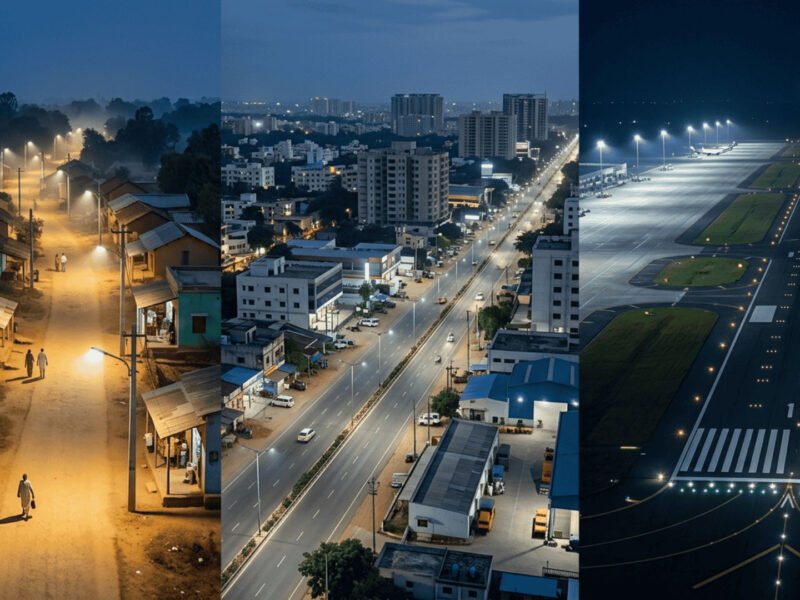
But things are changing fast. Across cities, towns, and even rural areas, smart lighting is reshaping how India glows at night. Behind this shift are innovative smart light manufacturers, many of them right here in Gujarat, building solutions made for Indian conditions — dusty roads, power fluctuations, and long working hours.
Let’s unpack how this change is happening, what problems it’s solving, and why it matters for India’s future.
What’s Actually Happening to Street Lighting in India?
Just five years ago, most Indian cities still used traditional halogen or CFL street lamps. They worked, but they came with headaches — high energy bills, dim output, and endless maintenance calls.
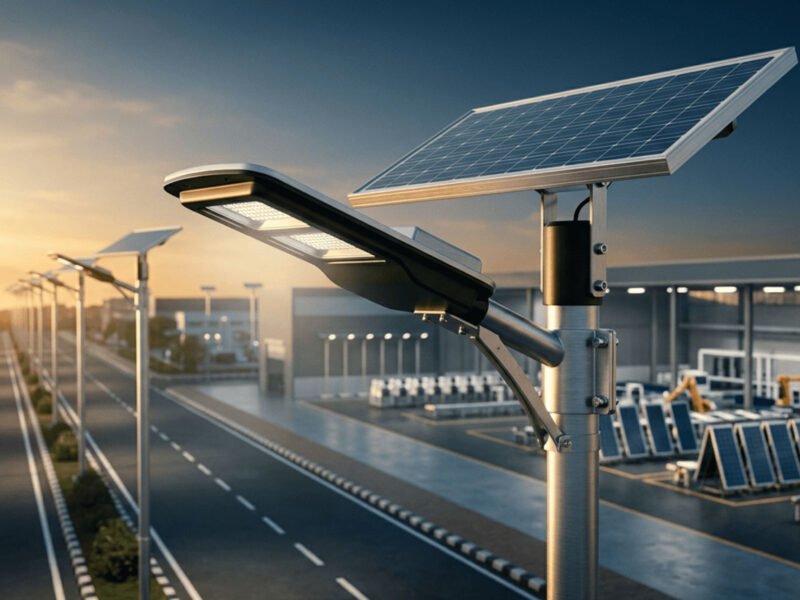
Now, you’ll notice a new kind of light on highways, industrial areas, and housing societies — bright, clean, and intelligently managed. These are smart LED street lights or solar-powered smart street lights, and they’re designed to think for themselves.
Instead of wasting energy, they sense when a road is empty and automatically dim down. When movement is detected, they brighten again. Simple, smart, and energy-saving.
That’s the difference between a light that just glows and a light that knows.
So, What Exactly Is a “Smart Light”?
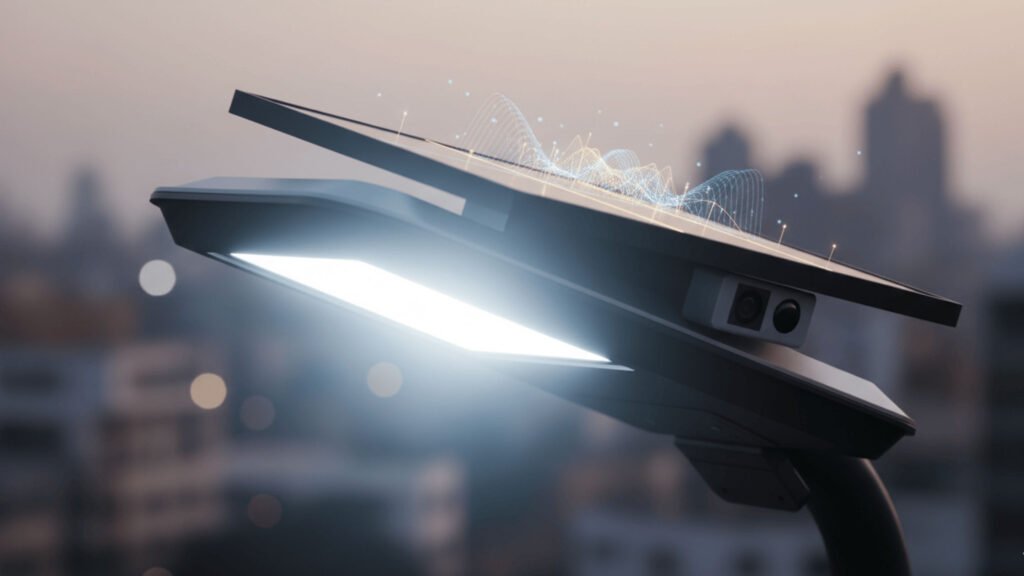
A smart light is more than an upgraded bulb. It’s a full system that combines LED technology, sensors, and automation.
Here’s what makes it special:
-
Motion sensors: Detect movement and adjust brightness automatically.
-
Daylight sensors: Turn lights off during the day to save power.
-
Remote control: Operators can monitor or switch lights using an app or web dashboard.
-
Data tracking: Some systems record energy use or maintenance alerts.
When you combine this with solar power, you get a street light that doesn’t rely on the electricity grid at all. That’s why solar smart LED street lights are becoming a favorite across Gujarat — especially in cities like Ahmedabad, Rajkot, and Surat where sustainability is now part of urban planning.
Common Lighting Problems (and How Smart Lights Fix Them)
Let’s be real. Traditional lighting systems have been a burden for years.
That’s why local governments, real estate developers, and industrial park owners are shifting to smart lighting solutions — it solves multiple pain points in one investment.
Solar Smart Street Lights — Why They’re Winning in India
India is blessed with sunlight for nearly 300 days a year. So why waste it?
That’s the thought behind solar smart street lights — lights that store solar energy during the day and use it after sunset.
For many locations, especially outside major cities, this is a game-changer.
Imagine a rural road in Kutch or a small industrial park in Sanand. Power cuts are common, but lighting can’t fail. Solar high mast lights keep these areas bright, without a single unit of electricity consumed from the grid.
A leading solar high mast manufacturer like Nessa designs these systems to withstand heat, wind, and dust — perfect for Indian terrain.
Why Businesses and Governments Are Switching
Let’s talk money and impact.
A typical street light can cost ₹500–₹800 per year in electricity. Multiply that by thousands of poles, and it’s clear why smart lighting makes sense.
Smart LED and solar lights reduce that by up to 70–100%, depending on setup.
But savings aren’t just about energy.
-
Fewer breakdowns: Longer lifespan means fewer replacements.
-
Faster issue detection: Remote systems alert when a lamp fails.
-
Cleaner energy: Using solar reduces carbon footprint.
Many municipalities in Gujarat have already reported huge savings after switching. The results are visible — brighter streets, smaller bills, and lower complaints.
Case Example: How a Smart Lighting Upgrade Changed an Industrial Area in Ahmedabad
In 2023, a major industrial estate near Naroda decided to replace 600 sodium lamps with smart LED street lights from Nessa.
Here’s what happened in just six months:
-
Energy bills dropped by 62%.
-
The area became noticeably brighter, improving security.
-
Maintenance teams reported 80% fewer service calls.
-
Employee night shifts became safer and smoother.
This isn’t theory — it’s happening across Gujarat. When done right, smart lighting pays for itself in less than two years.
Smart LED vs Solar Smart Lighting — Which One to Choose?
If your area has stable power, go for smart LED street lights.
If you face frequent outages or want zero electricity bills, solar smart LED lights are ideal.
How to Pick the Right Smart Light Manufacturer in India
Buying smart lights is not just about price. It’s about performance, durability, and support.
Here’s what you should check before choosing a smart light manufacturer:
-
Experience: Prefer companies with proven installations across India.
-
Certifications: Check for BIS, ISO, and IP65 or IP66 weather ratings.
-
Technology: Look for motion, daylight, and dimming control features.
-
Solar Compatibility: Ensure efficient panels and long-life batteries.
-
Support: Reliable after-sales service matters more than fancy specs.
-
Customization: Indian roads and poles differ — go for tailored design.
Nessa, for example, designs lights tested for Indian heat and dust, ensuring they last for years even in tough outdoor conditions.
The Role of Smart Lighting in India’s Smart City Mission
India’s Smart Cities Mission aims to create safer, cleaner, and energy-efficient cities. Lighting plays a big part in that.
Smart street lights form the digital backbone of smart cities — many poles now carry cameras, Wi-Fi, or air sensors too.
For cities like Ahmedabad, Vadodara, and Gandhinagar, upgrading to smart lighting is both an environmental and civic decision.
Companies like Nessa are helping these cities deploy LED street lighting systems and solar high mast lights, improving safety and cutting power bills dramatically.
The Future of Smart Lighting in India
Smart lighting isn’t a trend — it’s the new normal.
With government projects, smart cities, and private infrastructure booming, demand for LED lighting companies in India is growing faster than ever.
Soon, most street lights will be connected — monitored, dimmed, or switched remotely. And as costs drop, even smaller towns will join the movement.
For now, manufacturers in Ahmedabad like Nessa are leading this change — combining LED innovation, solar energy, and IoT technology to light India efficiently.
Smart Lights Are More Than Bright — They’re Smart Investments
Good lighting is about more than visibility. It’s about safety, savings, and sustainability.
If you manage a campus, township, industrial area, or local council, switching to smart LED or solar smart street lights can be one of the smartest upgrades you make this year.
With the right manufacturer — one that understands Indian roads, climate, and budgets — you don’t just buy lights; you buy long-term peace of mind.
To explore customized, Made-in-India lighting solutions, visit Nessa — a trusted smart light manufacturer in Ahmedabad, offering innovative LED and solar solutions across India.