
If you speak to any city engineer or industrial facility manager in India, you’ll hear one common worry:
“Maintenance cost is killing the project.”
It doesn’t matter whether it’s a municipal road in Ahmedabad, a campus in Sanand, an industrial zone in Dahej, or a residential township in Surat — the real challenge comes after installation.
Replacing batteries, sending technicians again and again, checking faults, fixing wiring, travelling long distances. The cycle never ends.
That’s exactly why solar high mast lighting system have become the preferred lighting solution for cities and industries across India.
They are affordable, reliable, and most importantly – low maintenance.
And when combined with RMS remote monitoring systems, the maintenance reduction becomes even bigger.
This blog will help you understand:
- Why semi integrated solar street lights are so popular today
- How they reduce long-term costs
- Real-world examples from Indian cities and industries
- How RMS monitoring saves lakhs in O&M
- What to look for when buying these lights
- Why brands like Nessa, Ahmedabad, are trusted across India
So, let’s dive in.
-
What Exactly Is a Semi Integrated Solar Street Light?
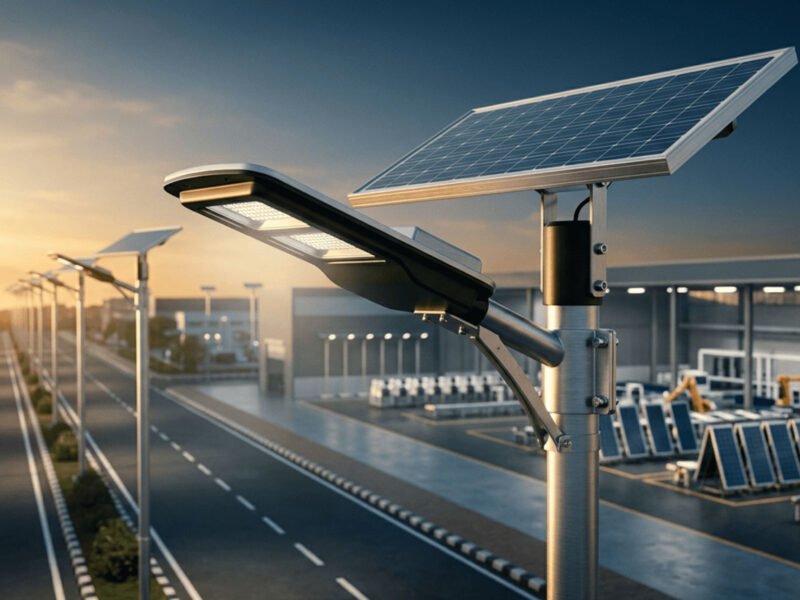
- Think of it as the perfect balance between fully integrated and traditional solar street lights. A semi integrated solar street light includes: LED luminaire
Lithium battery
- Charge controller
- Motion sensor (in many models)
…all combined in one compact unit.
- The only part that stays separate is the solar panel, which is fixed on a frame above the light.
- This simple design has two major advantages:
- 1. Better heat dissipation – increases battery life
2. Easy replacements – no need to remove the whole unit This is why cities and industries prefer it. -
Why Cities and Industries Are Rapidly Shifting to Semi Integrated Solar Street Lights
- Let’s break down the main reasons.
- Extremely Low Maintenance (Biggest Advantage)
- Maintenance eats 20–30% of lighting project costs over 3–5 years.
- Semi integrated lights reduce this because:
- No complex wiring
- Battery remains safe from heat
- Fewer component failures
- Easy servicing with basic tools
- Separate panel avoids damage when storms hit
A typical LED street light (non-solar) needs:
- Large cables
- External drivers
- MCB boxes
- Power connections
- Regular inspection
A semi integrated solar light cuts 60–70% of that effort.
-
RMS Remote Monitoring Saves Time, Money, & Manpower
- Many professional solar street light manufacturers — including Nessa (Ahmedabad) — offer RMS Remote Monitoring Systems.
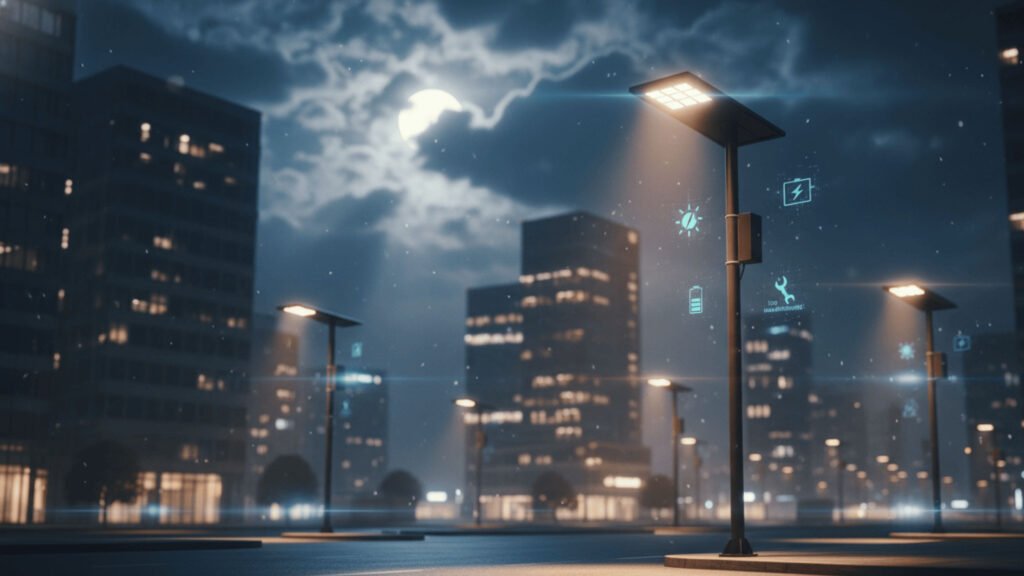
- RMS works like a virtual watchman for your lights.
- On your mobile or laptop, you can check:
- Battery health
- Solar panel charging
- Fault alerts
- Light on/off status
- Energy production
- Panel disconnection
- Tampering
Imagine a municipal engineer in Vadodara monitoring 2,500 street lights from a single dashboard without visiting even one pole. Or a factory in Vapi checking the performance of their entire campus lighting remotely.
This reduces:
- Site visits
- Manual inspection
- Emergency repair work
- Breakdown time
- That’s why RMS is becoming standard in smart solar lights across India.
- Higher Battery Life = Lower Replacement Cost
- Most semi integrated street lights use LiFePO4 lithium batteries, which have:
- Long life (5+ years)
- High safety
- Faster charging
- Low temperature impact
Because the battery is placed inside the unit but protected from direct heat, it lasts longer than fully integrated designs.
- This means fewer battery replacements and lower O&M cost.
- Perfect for Indian Climatic Conditions
- India has:
- Very hot summers
- Dusty industrial areas
- High humidity in coastal zones
- Occasional heavy rains
- Power cuts in rural regions
Semi integrated solar lights handle these conditions well because:
- Their separate panel positioning improves ventilation
- Dust doesn’t affect battery life much
- Batteries stay cool
- Maintenance is minimal even in remote areas
This is why many Gujarat municipalities prefer semi integrated solutions over fully integrated models.
-
Simple Installation = Lower Project Cost
-
No underground cable.
-
No transformer load.
-
No yearly electricity bill. .
-
Just:
-
Dig foundation
-
Install pole
-
Fix the light
-
Mount the panel
-
Light works automatically
The entire installation takes 20–30 minutes only.
-
For large-scale projects, this saves lakhs.
-
Real-World Examples From India
-
Ahmedabad Municipal Areas Many parks and public pathways in Ahmedabad now use semi integrated solar street lights from local manufacturers.
Why? -
Easy servicing and better backup even during cloudy days. Industrial Zones in Sanand & Dahej Industries prefer semi integrated lights for:
-
Parking areas
-
Security lighting
-
Internal roads
-
Warehouse surroundings
These areas need reliable lighting without heavy electricity bills.
-
GIDC Estates
-
GIDC estates often face long cable routes and power issues.
Solar lights remove this dependency entirely. -
Rural Roads in Rajasthan & MP
-
Remote villages prefer semi integrated lights because servicing is simple, and replacements are quick.
-
Comparison: Semi Integrated vs Fully Integrated Solar Street Lights
-
FeatureFully IntegratedSemi IntegratedBattery lifeShorter (heat exposure)Longer (better cooling)MaintenanceHigherLowerReplacementFull unit replacedOnly faulty partCostHigherModerateDurabilityGoodVery GoodPanel angleFixedAdjustableBest forSmall projectsCities & industries Semi integrated clearly wins for long-term projects.
-
Why Lighting Companies Across India Prefer Semi Integrated Lights
-
Leading LED lighting companies in India have now included semi integrated models in their mainstream product range.
-
Why?
-
Because the demand for low-maintenance, smart solar lights has grown sharply after 2023.
-
Industries want Industrial LED Lighting solutions that run without power interruptions.
-
Architects want Architectural LED Lighting that supports sustainability goals.
-
And municipalities want smart solutions with RMS monitoring. Semi integrated lights perfectly fit these needs.
-
How Buying From a Good Manufacturer Saves Money
-
Choosing the right solar street light manufacturer makes all the difference.
-
A trusted company like Nessa (Ahmedabad) offers:
-
BIS-certified LEDs
-
High-quality LiFePO4 batteries
-
MPPT charge controllers
-
RMS-based smart monitoring
-
Custom wattage options
-
Durable poles and mounting frames
-
This ensures:
-
Long light life
-
High efficiency
-
Fewer failures
-
Easy maintenance
-
Better ROI for large projects
Sometimes, the lowest price ends up costing the most due to frequent breakdowns.
That’s why contractors, EPC companies, and industries prefer established manufacturers. -
Who Should Consider Semi Integrated Solar Street Lights?
-
These lights are ideal for:
-
Municipal corporations
-
Smart city projects
-
Factories and industrial plants
-
Warehouses and logistics hubs
-
Educational campuses
-
Hospitals
-
Housing townships
-
Resorts
-
Highways & rural roads
-
GIDC industrial areas
Anywhere you need zero-electricity, low-maintenance lighting, semi integrated systems work perfectly.
-
How Much Maintenance Do They Need?
-
Here’s the good news.
-
Maintenance is minimal.
-
Just:
-
Panel cleaning once every 3–4 months
-
Checking connections once a year
-
Basic inspection after monsoon
That’s all.
-
If RMS is enabled, faults can be detected instantly without manual checking.
-
This makes the light ideal for large-scale deployment.
-
Why Semi Integrated Solar Street Lights Are the Most Reliable Choice for India
-
Lighting projects fail not because the product is bad, but because the wrong product is used for the wrong environment.
-
For Indian climates, dusty regions, industrial estates, and municipal areas — semi integrated solar street lights offer the best combination of:
-
Low maintenance
-
Long lifespan
-
High efficiency
-
Easy serviceability
-
Lower total project cost
Brands like Nessa (Ahmedabad) are making these solutions even better with RMS remote monitoring systems, which reduce field visits and improve performance.
-
For cities and industries aiming to adopt smart, sustainable, and budget-friendly lighting, semi integrated solar street lights are truly the most reliable choice.
-
Frequently Asked Questions (FAQs)
- 1. How long does a semi integrated solar street light last?
-
Most systems last 5–7 years, but good-quality models from reliable manufacturers can last even longer.
- 2. Is maintenance really low for these lights?
- Yes. Only panel cleaning and annual inspection are needed. RMS monitoring further reduces maintenance.
- 3. How many hours does the light run daily?
- Most lights run 10–12 hours depending on sunlight and battery size.
-
4. Are semi integrated lights suitable for industrial areas?
-
Absolutely. Industries prefer them for reliability, ease of maintenance, and zero electricity bills.
-
5. Can these solar lights run during cloudy days?
-
Yes. High-quality LiFePO4 batteries provide 2–3 nights of backup.
-
6. Which wattages are commonly used in India?
-
12W, 15W, 20W, 24W, and 30W are most popular for streets and campuses.
-
7. Can I monitor the lights remotely?
-
Yes, if the system comes with RMS remote monitoring.
-
8. Where can I buy these lights?
-
Manufacturers like Nessa (Ahmedabad) supply across Gujarat and PAN India.