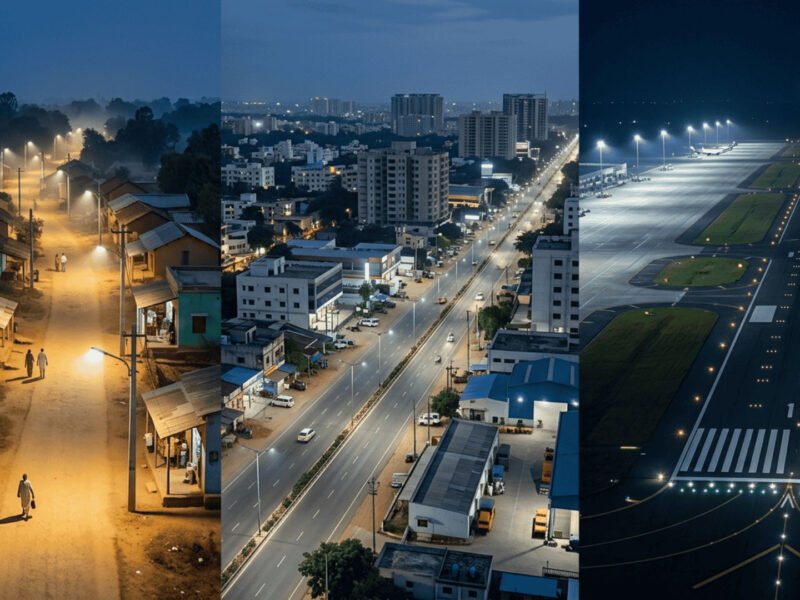

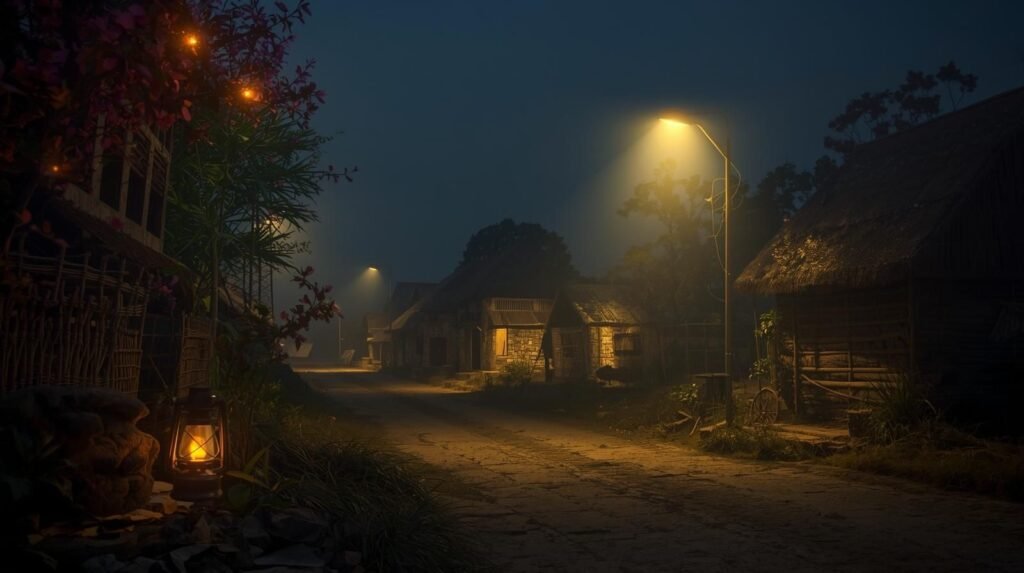
If you travel through rural India today, especially across Gujarat, you will notice something changing. Streets that once turned dark after sunset now stay bright well into the night. Village chowks remain active. Local shops stay open longer. People walk home with more confidence. Children study outside their homes during power cuts.
This shift did not happen overnight. It happened because rural lighting has become a priority for planners, contractors, government departments, and manufacturers. From panchayat roads to central community spaces, new technologies like Semi Integrated Street Lights and Solar High Masts are creating safer and more functional rural environments.
Lighting is no longer considered a luxury in remote regions. It is now a basic requirement for development and a foundation for rural growth. As someone who works closely with infrastructure teams and sees these transitions happening across India, I wanted to share a clear, grounded, and helpful guide on how today’s Rural Lighting Solutions are reshaping daily life and project planning.
Why Rural Lighting Has Become a Priority in India
Every year, more rural households gain access to electricity. But wide-area lighting remains inconsistent, especially in regions where poles are spaced far apart or grid power is unstable. Many districts in Gujarat, Rajasthan, Madhya Pradesh, Maharashtra, and Karnataka still depend heavily on solar-powered lighting—mainly because it offers reliable performance without increasing electricity bills.
What’s interesting is that lighting in villages is not only about visibility. It affects safety, productivity, mobility, and community activity. When rural lighting is done well, it improves:
-
Movement after dar
-
Women’s safety
-
Road visibility for bikes and small vehicles
-
Social gatherings and community event
-
Local market operations
-
Awareness and acceptance of LED usage
We often underestimate the role of lighting in rural development. But any contractor or panchayat leader will tell you this: a well-lit village feels more alive, more connected, and more confident.
Understanding India’s Need for Smarter Rural Lighting
Rural environments face a unique set of challenges. Harsh summers, dust, unpredictable power, and limited maintenance support require lighting systems that are durable and simple to manage. That’s why Indian manufacturers and solution providers—especially those from Gujarat—have shifted heavily toward:
-
Solar-powered technologies
-
Long-life lithium batteries
-
High-efficiency LED modules
-
Weather-resistant enclosures
-
Easy installation method
Among all lighting systems available in the market today, Semi Integrated Street Lights and Solar High Masts have emerged as the most practical and sustainable choices for rural Indian landscapes.
What Exactly Is a Semi Integrated Street Light?
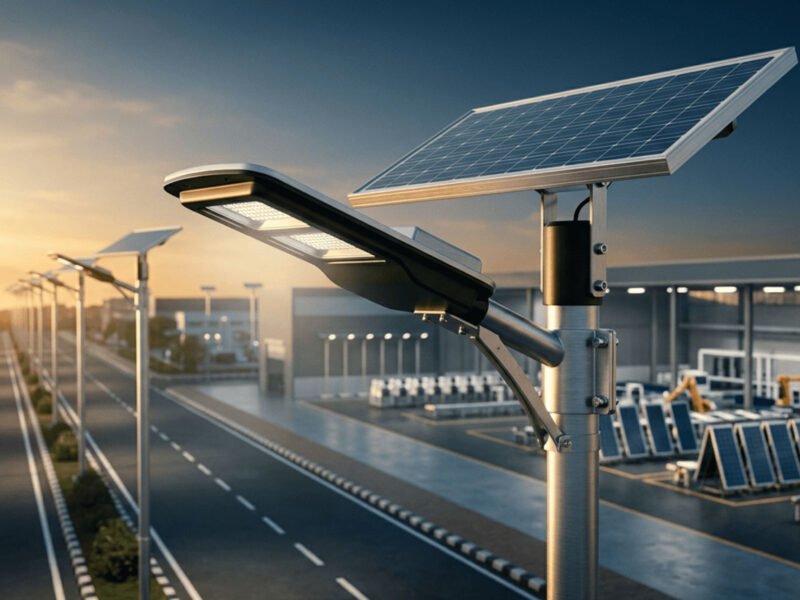
A Semi Integrated Street Light is an intelligent lighting system where the LED fixture, battery, and controller are integrated into a single unit, while the solar panel remains separate. This combination ensures long-term durability and high energy efficiency, even in regions where sunlight availability fluctuates.
Many rural contractors prefer Semi Integrated models because panels can be tilted according to sunlight direction. This helps ensure proper charging in districts like Banaskantha, Kutch, Dahod, or Narmada, where climate patterns differ across seasons.
The major reason these lights are popular in rural areas is the balance between cost, performance, and maintenance. They are easier for local technicians to understand and require very few service visits. In a place where climbing the pole repeatedly becomes a challenge, this matters a lot.
Semi Integrated Street Lights are commonly installed along village roads, school entrances, smaller market lanes, panchayat campuses, health centers, and community halls. Their brightness is strong enough for rural needs, and their operating cost is almost zero because they run on solar energy.
Solar HighMasts: Lighting Large Areas with One System
If Semi Integrated Street Lights are perfect for linear paths, Solar High Masts are ideal for wide areas. A HighMast is typically between 9 to 16 meters tall and carries multiple LED floodlights at the top. One HighMast can illuminate an entire village square, a busy chowk, a local haat, or a bus stand.
Anyone who has driven through villages in Mehsana, Surendranagar, Jamnagar, or Bharuch will notice these tall poles standing at major junctions. They have quickly become the heart of rural public lighting because they provide uniform brightness without requiring an electrical connection.
HighMasts are extremely helpful in rural zones where people gather after sunset—be it for local events, religious functions, garba performances, weekly markets, or simply community meetings. Many CSR programs also support HighMast installations because they create a direct impact that villagers experience instantly.
Choosing Between Semi Integrated Street Lights and Solar HighMasts
One of the most common questions contractors ask is, “Which system should I select for my project?”
Here’s a simplified comparison that professionals use when evaluating options:
This comparison is not just technical. It reflects what actually works in real on-ground projects. For example, if you are improving internal village roads under a panchayat tender, Semi Integrated lights do the job perfectly. But if the requirement is to illuminate a main chowk or festival area, there is no better option than a Solar HighMast.
Technology Behind the Latest Rural Lighting Solutions
India’s lighting industry has evolved fast. Earlier systems required frequent replacements and performed poorly during monsoon. Today’s systems are far more stable. A few innovations are playing a significant role:
Lithium (LiFePO₄) batteries
These batteries charge faster, hold power longer, and perform better in high temperatures. Rural regions in Gujarat, especially around Kutch and Saurashtra, benefit greatly from this upgrade.
MPPT controllers
MPPT (Maximum Power Point Tracking) enhances charging efficiency even during cloudy days. This becomes essential during monsoon months, when rural activity continues but sunlight availability reduces.
High-lumen LED technology
LEDs have become brighter but consume less power. A 15W fixture today can outperform older 30W systems. This directly improves battery backup and extends the lifespan of rural lighting systems.
Architectural LED Lighting in Rural India
Architectural LED Lighting was once limited to cities. Today, rural regions proudly use it to beautify temples, entrance gates, community halls, and tourist spots. These installations create a sense of identity and help villages showcase their culture. Gujarat, in particular, has seen many temple renovation projects adopt LED architectural lighting.
This form of lighting also stimulates local tourism, especially in pilgrimage-focused villages. A beautifully lit temple or lake area attracts more visitors, improving small-scale business activity.
Commercial Indoor Lighting for Rural Institutions
Government offices, schools, anganwadi centers, rural health clinics, and cooperative societies now depend heavily on LED indoor lighting. The shift from tube lights to panel LED fixtures has reduced electricity costs and improved visibility for staff and students.
When a classroom switches to proper Commercial Indoor Lighting, students feel more comfortable. Teachers can conduct sessions without interruptions. Energy bills drop. Even a simple change has a long-term developmental impact.
Commercial Outdoor Lighting for Village Markets
Rural markets are becoming more structured. Milk collection centers, grain mandis, open storage areas, and parking yards now require strong and reliable Commercial Outdoor Lighting. A well-lit market ensures better safety for farmers and smoother operations during early morning and late evening hours.
LED floodlights are now widely used in these locations because they perform consistently in tough conditions and require very little maintenance.
Role of Industrial Lighting Manufacturers in Rural Growth
Industries located outside city limits often face power fluctuation issues. A strong and durable lighting system becomes essential. Many Industrial Lighting Manufacturers – especially those based in Ahmedabad—design systems specifically for dusty, high-temperature areas.
Their high-bay lights, weather-proof fixtures, and solar-powered systems serve dairy plants, cold storage units, agro-processing factories, and rural warehouses. This directly supports rural industrial growth and employment.
Real Examples from Gujarat’s Rural Landscape
Lighting changes the way people live. Here are a few scenarios that capture the real impact:
Village Chowk in Patan District:
Before installation, the chowk turned dark early and villagers avoided gatherings. After installing a Solar HighMast, the same space became a meeting point. Women feel safer. Shops remain open longer. During festivals, the space feels lively.
School in Sabarkantha:
Classrooms with old tube lights struggled with flicker issues. When Commercial Indoor Lighting was upgraded, teachers noticed an improvement in student attention. The electricity bill dropped significantly as well.
Street in Surendranagar:
Narrow lanes once had only one pole for a long stretch. Semi Integrated Street Lights were added at regular intervals. Today, residents walk comfortably at night, and movement of two-wheelers has become safer.
These examples are common across India. Once lighting improves, the rhythm of daily life improves with it.
FAQs
Q.1 What lighting solution works best for rural Indian roads?
A.1 Semi Integrated Street Lights work best on rural roads because they deliver bright, consistent lighting and operate on solar power.
Q.2 Where should Solar HighMasts be installed?
A.2 Solar HighMasts are ideal for village squares, markets, bus stands, and other open public areas needing wider illumination.
Q.3 Are these lighting solutions suitable for the monsoon season?
A.3 Modern systems use LiFePO₄ batteries and MPPT controllers, which perform well even during cloudy days.
Q.4 Do rural lighting systems require frequent maintenance?
A.4 No. Most systems require minimal maintenance, especially when sourced from reliable manufacturers.
Q.5 Can architectural lights be used in rural areas?
A.5 Yes. Architectural LED Lighting enhances temples, gardens, entrances, and community structures in rural regions.
Light That Uplifts Communities
Rural India is moving forward with confidence, and lighting plays a much bigger role in this progress than most of us realise. A well-designed lighting system transforms roads, encourages activity, supports safety, and creates opportunities for growth.
Manufacturers and solution providers from Ahmedabad – such as Nessa—have helped accelerate this journey by engineering reliable and high-quality Innovative Lighting Solutions suited for Indian conditions. From Semi Integrated Street Lights to large-scale Solar HighMasts, these technologies are designed to illuminate rural spaces in a sustainable and affordable way.
If you are planning a rural development project, the right lighting choice can create a long-lasting impact. A brighter village is a stronger village—and rural India deserves nothing less.