
Lighting decisions in India have changed quietly but completely.
A decade ago, people asked one simple question.
“How bright is this light?”
Today, the questions are different.
How much power will it consume?
How long will it last?
Will it survive heat and dust?
Can it reduce maintenance headaches?
This shift explains why innovative lighting solutions are gaining serious attention across India.
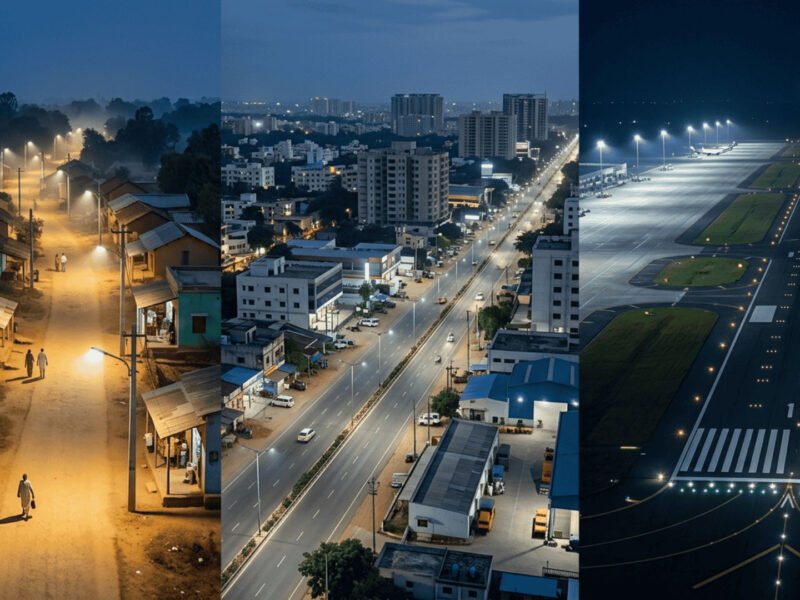
From Gujarat’s industrial zones to expanding urban roads, lighting now affects cost, safety, and sustainability.
This guide explains how smart LED and solar systems are shaping modern Indian infrastructure.
It is written from a buyer’s perspective.
No jargon.
No hype.
Just practical insight.
Why Lighting Matters More in India Today
India is building faster than ever.
Highways stretch longer each year.
Industrial parks expand outside city limits.
New airports, ports, and logistics hubs appear regularly.
With this growth comes pressure.
Electricity costs rise steadily.
Maintenance budgets shrink.
Sustainability targets become mandatory.
Lighting touches all these issues.
A poor lighting decision keeps draining money.
A smart one keeps saving it.
That is why innovative lighting solutions are no longer optional upgrades.
They are part of core infrastructure planning.
What Makes a Lighting Solution “Innovative” in Indian Conditions
Innovation means usefulness, not complexity.
Especially in India.
A lighting solution becomes innovative when it solves local problems.
It must handle heat.
It must resist dust.
It must tolerate voltage fluctuations.
It should also reduce energy usage.
And it should last for years.
LED technology, solar integration, and intelligent controls meet these needs well.
That is why they dominate modern projects.
Innovation here is about reliability.
Not flashy features.
Smart LED Lighting Solutions Explained Simply
LED lighting itself is not new anymore.
But smart LED lighting solutions take efficiency further.
These systems combine LED fixtures with sensors or controllers.
Lights respond to movement.
They adjust brightness automatically.
They switch off when not needed.
In commercial buildings, this avoids wasted power.
In factories, it improves visibility without increasing heat.
A textile unit near Ahmedabad replaced old fixtures with smart LEDs.
Their lighting cost dropped noticeably within months.
Worker comfort improved too.
The technology worked quietly in the background.
That is real innovation.
Commercial & Industrial LED Lighting Solutions for Heavy Usage
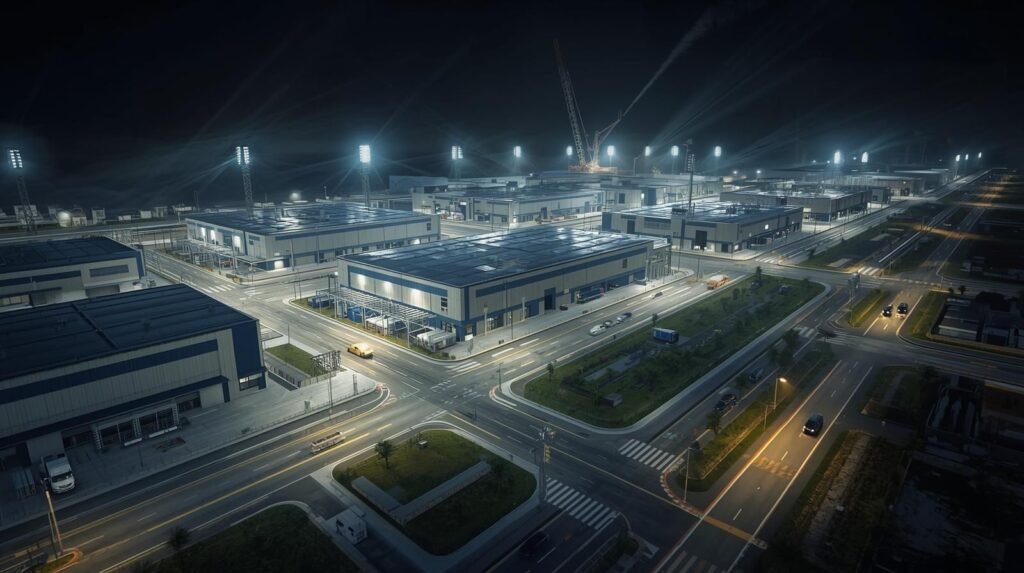
Factories and warehouses need different lighting.
High ceilings demand powerful output.
Dust demands sealed fixtures.
Continuous operations demand durability.
Commercial & industrial LED lighting solutions are designed for this reality.
They provide uniform brightness.
They reduce glare.
They run for long hours without failure.
Many Indian industries still hesitate due to initial cost.
That hesitation fades after installation.
Lower power bills start immediately.
Maintenance calls reduce sharply.
Over time, the total expense becomes far lower than traditional systems.
Solar Powered Lighting Systems: Practical, Not Just Green
Solar lighting used to feel experimental.
Today, it feels necessary.
Solar powered lighting systems solve a basic Indian problem.
Unreliable grid power.
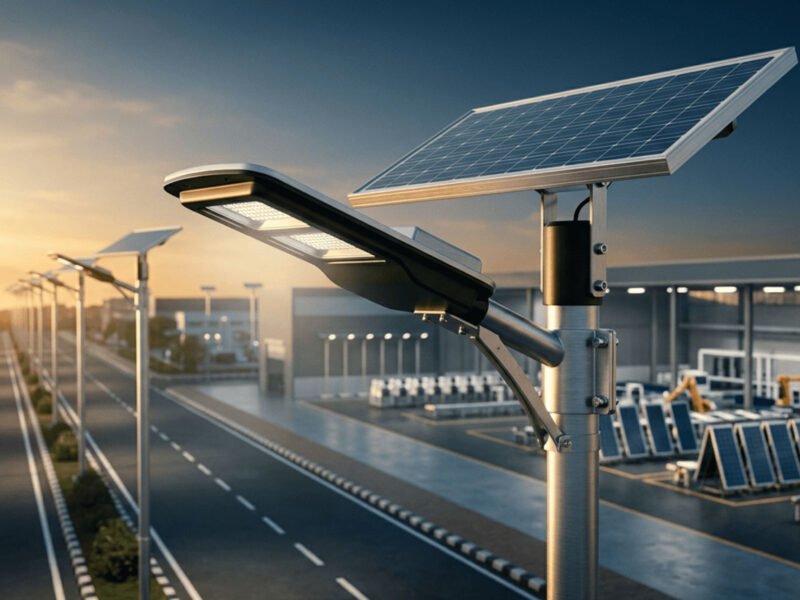
Solar street lights work independently.
They store energy during the day.
They illuminate roads all night.
In rural Gujarat, solar lighting changed daily life.
Roads became safer after sunset.
Local shops stayed open longer.
Even urban projects benefit.
Highways and campuses avoid trenching and cabling.
Solar lighting offers certainty.
The lights work regardless of outages.
Intelligent Street Lighting Solutions and Public Safety
Street lighting affects how safe people feel.
Dark roads invite accidents and crime.
Intelligent street lighting solutions improve this quietly.
Lights brighten when movement increases.
They dim when roads are empty.
Energy savings follow naturally.
So does better safety.
Remote monitoring alerts teams instantly when failures occur.
No waiting for complaints.
Many Indian municipalities now prefer intelligent systems.
Maintenance costs fall significantly.
Cities like Ahmedabad benefit greatly from this approach.
Smart City Lighting Solutions Beyond Just Illumination
Smart cities need smart infrastructure.
Lighting plays a bigger role than most people realise.
Smart city lighting solutions integrate with urban systems.
Lighting poles support cameras.
They support sensors.
They support communication equipment.
This reduces clutter.
It also improves efficiency.
In Indian smart city projects, lighting becomes a platform.
Not just a utility.
Urban planners appreciate this flexibility.
Citizens enjoy safer, better-lit streets.
Advanced LED Lighting Technology for Special Environments
Some places demand precision.
Airports are one example.
Industrial plants are another.
Advanced LED lighting technology handles such demands.
Airport runways need strict illumination standards.
Ports need corrosion resistance.
Factories need vibration tolerance.
Generic fixtures often fail here.
Purpose-built LED systems succeed.
India’s infrastructure expansion increases demand for such solutions.
Quality matters more than price in these cases.
How Indian Buyers Should Choose Lighting Solutions
Most buyers start with wattage and price.
That approach causes problems later.
Start with usage patterns.
How many hours daily?
Indoor or outdoor?
Exposure to dust or rain?
Next, choose the right technology.
LED for efficiency.
Solar for independence.
Smart controls for savings.
Finally, focus on installation quality.
Poor installation ruins good products.
Working with experienced providers reduces risk.
Companies like Nessa, based in Ahmedabad, focus on practical system design.
They understand Indian conditions well.
Their role is guidance, not pressure.
Real-World Indian Use Cases
An industrial estate in Gujarat upgraded warehouse lighting.
Energy usage dropped significantly within months.
A highway project installed solar lights.
Maintenance visits reduced sharply.
A commercial building adopted smart LED lighting.
Employee comfort improved.
Bills reduced steadily.
These are not isolated stories.
They repeat across India.
When Should You Upgrade Lighting Systems
Waiting for failures costs more.
Upgrading early saves money.
Expansion projects offer the best opportunity.
Renovations also work well.
Existing facilities can upgrade gradually.
Start with high-usage areas.
Savings begin immediately after installation.
Buyer Guidance: What to Avoid
Avoid focusing only on upfront prices.
Cheap systems fail early.
Avoid ignoring local conditions.
Imported designs often struggle in India.
Avoid skipping after-sales support.
Maintenance matters long-term.
Choose partners who understand execution.
FAQs
What are innovative lighting solutions?
They combine LED, solar, and smart controls for efficiency and reliability.
Are smart LED lighting solutions suitable for Indian weather?
Yes, when designed for heat, dust, and voltage fluctuations.
Where do solar powered lighting systems work best?
Highways, villages, campuses, and areas with unstable grid supply.
Do intelligent street lighting solutions really save energy?
Yes, automation reduces unnecessary power use significantly.
Are innovative lighting solutions expensive initially?
Initial costs are higher, but long-term savings outweigh them.
Which sectors benefit most from LED lighting?
Manufacturing, warehousing, commercial buildings, and public infrastructure.
Lighting the Way Forward
Why Smarter Lighting Is Becoming the Indian Standard
India’s growth demands better infrastructure choices.
Lighting plays a silent but powerful role.
Innovative lighting solutions reduce costs.
They improve safety.
They support sustainability goals.
With experienced partners like Nessa, organisations can plan confidently.
From Ahmedabad to across India, smarter lighting is now expected.
Good lighting does more than brighten spaces.
It supports progress.