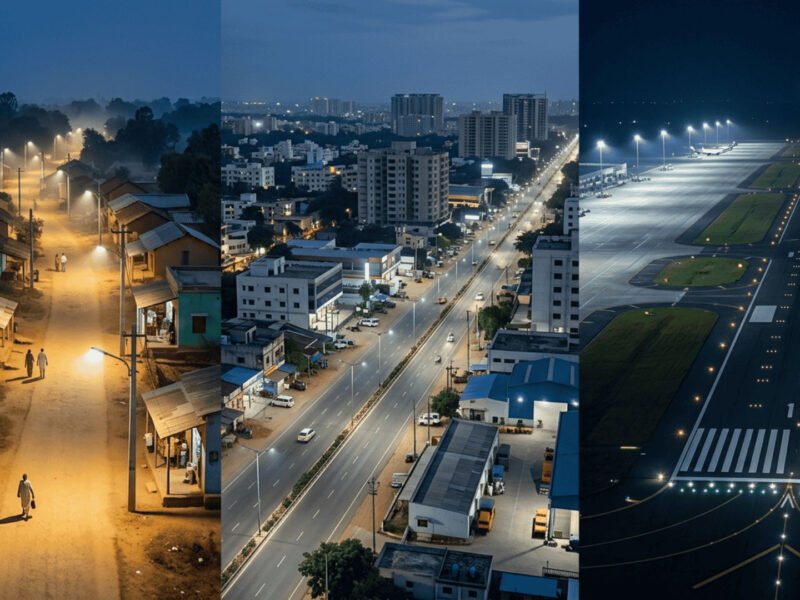

When you travel across India – whether it’s the wide roads of Ahmedabad, the residential pockets of Bangalore, or the fast – developing industrial towns in Maharashtra – you’ll notice one major shift in outdoor lighting. Traditional street lights are slowly giving way to smarter, solar – powered options. And among them, Semi Integrated Street Lights have become one of the most preferred choices for city planners, developers, and private townships.
The adoption didn’t happen overnight. It started with small installations in gated societies, expanded to rural roads under government schemes, and today, it has become a trusted lighting solution for both urban and semi – urban India.
But what exactly makes Semi Integrated Street Lights so popular? Why are more cities and developers switching to them? And how do they compare with traditional systems?
This detailed guide answers those questions in simple, practical language – using examples from real Indian use cases – so you can make an informed decision, whether you are a builder, contractor, government engineer, or decision – maker for a housing project.
Understanding the Semi Integrated Street Light – In Simple Terms
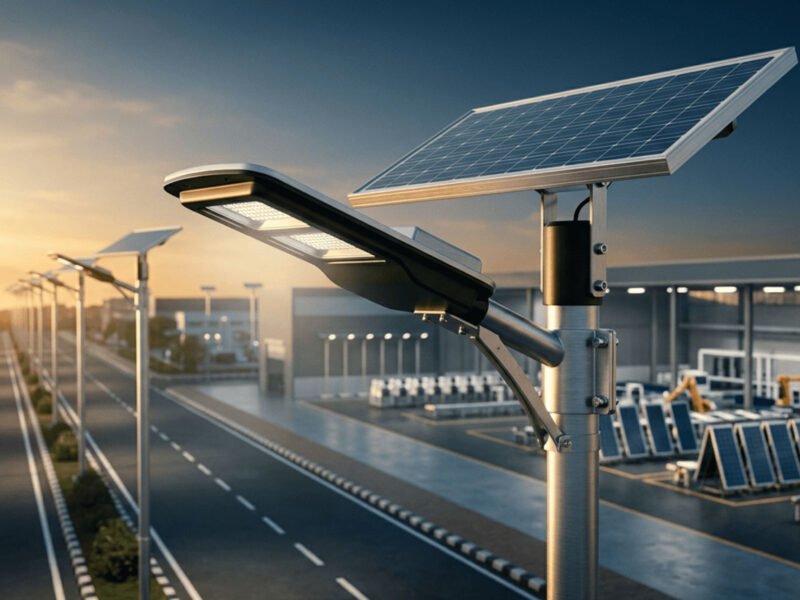
A Semi Integrated Street Light combines three major components – the LED light, battery, and charge controller – into a single, weatherproof unit mounted on the pole. The solar panel is placed separately at the top, facing the sun.
This design may look simple, but it solves many issues that India faces with traditional outdoor lights:
-
Unstable power supply
-
High electricity costs
-
Frequent maintenance
-
Difficult wiring
-
Safety concerns in isolated areas
Compared to fully integrated (all – in – one) lights, the semi – integrated model offers flexibility and better performance in regions with mixed weather patterns.
That’s why government departments, smart city planners, and private developers increasingly choose them from reliable solar manufacturers across India.
Why Cities Across India Are Choosing Semi Integrated Street Lights
1. They Reduce Electricity Costs Drastically
Across India, outdoor lighting is one of the costliest expenses for both municipalities and private developers. Traditional street lights draw power 12 hours a day. The bills add up quickly.
Semi integrated solar lights run on free solar energy, which means:
-
Zero monthly electricity bills
-
Zero dependence on the local power grid
-
Lighting continuity even during power cuts
When installed at scale – like in Indore, Pune, Surat, and Hyderabad – cities have saved crores every year simply by switching to solar street lighting.
Housing societies in places like Noida, Ahmedabad, and Chennai see quick returns as well, especially when they replace dozens of outdated sodium or metal halide lamps.
2. They Work Perfectly in Indian Weather
One of the biggest challenges for outdoor lights in India is weather variation. Cities like Mumbai face heavy rain. Rajasthan has extreme heat. Karnataka receives long monsoons. Delhi and Punjab face winter smog.
Semi integrated lights are built for this:
-
The battery is safely enclosed
-
Electronics are protected from dust and moisture
-
Lithium and LiFePO4 batteries handle heat better
-
The solar panel can be angled depending on region
This is why they perform reliably in Gujarat’s dry heat, Kerala’s humidity, and the hill regions of Uttarakhand where wiring is difficult.
3. Easy Installation Saves Time for Developers and Government Teams
Ask any civil contractor or lighting engineer – they’ll tell you the biggest headache with traditional lights is wiring. You need:
-
Underground cables
-
Long trenches
-
Skilled electricians
-
Junction boxes
-
Multiple connection points
Semi integrated street lights avoid most of these.
A pole, a panel, and the light unit.
No grid connection.
No long trenching.
No transformer load approvals.
This reduces installation time by 60–70%.
Cities like Nagpur and Jaipur have used semi integrated solutions to light large stretches in a matter of days instead of weeks.
Gated communities in Pune, Ahmedabad, and Gurgaon have also adopted them for quick setup during new launches.
4. Maintenance Is Far Cheaper and Much Simpler
Traditional lights fail often because of:
-
Cable cuts
-
MCB faults
-
Overheating
-
Poor power quality
-
Fuse burnout
-
Weak poles
Semi integrated lights eliminate most of these structural problems.
Maintenance teams only need to check:
-
Panel cleanliness
-
Battery health
-
LED brightness
-
Automatic dusk – to – dawn settings
These checks take minutes instead of hours.
For large townships, industrial parks, and municipal roads, this reduction in yearly maintenance results in major budget savings.
5. Better Lighting Quality Improves Safety After Dark
Poor lighting is a major safety concern in many cities, especially in rapidly growing areas like Greater Noida, Navi Mumbai, and the outer ring roads of Hyderabad and Bangalore.
Semi integrated lights offer:
-
High – lumen LED output
-
Uniform brightness
-
Wide beam coverage
-
Optional motion sensing
-
Long runtime
Well – lit streets reduce accidents, discourage theft, and create a safer environment for residents.
Many townships in Ahmedabad, Surat, Indore, and Coimbatore have noted fewer complaints after switching to solar street lighting.
6. Ideal for Remote and Off – Grid Areas
Many rural roads and village areas in India still don’t receive stable electricity. Semi integrated solar lights have become the preferred choice for:
-
PMGSY roads
-
Panchayat lighting
-
Rural bus stops
-
Village entrances
-
Community centres
-
School compounds
States like Uttar Pradesh, Bihar, Jharkhand, and Odisha have adopted these lights at scale because they don’t need grid power and continue working even during outages.
7. Stronger ROI for Housing Projects and City Developers
Developers always look for long – term value when planning street lighting for new sites.
Semi integrated lights help by offering:
-
Lower installation cost
-
Zero electricity cost
-
Low maintenance
-
Long lifespan
-
Reliable nighttime lighting
For a housing project with 50+ poles, the long – term savings over 5–7 years are significant.
In most cases, developers recover the upfront cost within two years purely from electricity savings.
8. Environmentally Conscious Choice for Future – Ready Cities
Urban India is moving toward sustainable development. Semi integrated solar lights help reduce:
-
Carbon emissions
-
Fossil fuel dependency
-
Electricity load on the grid
-
Overall environmental impact
Cities like Chandigarh, Pune, and Ahmedabad are already integrating solar lighting into their smart city plans, setting an example for the rest of the country.
What Buyers Should Look for Before Choosing a Semi Integrated Street Light
A few key factors determine long – term performance:
Battery Quality:
Look for lithium or LiFePO4 batteries for better life and safety.
LED Output:
Higher lumen levels ensure wide coverage and better visibility.
Solar Panel Wattage:
Needs to match the battery and lighting load for optimal performance.
Build Quality:
Weatherproof construction ensures durability in extreme Indian climates.
Manufacturer Reliability:
Choose established solar street light manufacturers who offer proper testing, certification, and after – sales support.
Companies like Nessa, based in Ahmedabad, design robust solar lighting systems for Indian conditions, supporting smart city projects, housing developers, and public infrastructure needs.
FAQs
1. What is a Semi Integrated Street Light?
It’s a solar – powered street light with the battery, LED, and controller built into one unit, while the solar panel is mounted separately. This design gives better flexibility, performance, and long – term durability in Indian weather.
2. Are Semi Integrated Street Lights better than traditional lights?
Yes. They reduce electricity bills, work without wiring, and perform reliably during power cuts. They are also easier to install and maintain.
3. How long does a Semi Integrated Street Light last?
A good – quality model lasts 5–7 years, depending on the battery type, usage, and weather exposure.
4. Do Semi Integrated Solar Street Lights work during rainy or cloudy days?
Yes. Quality lithium or LiFePO4 battery systems store enough energy to power the light even during low – sunlight days.
5. Where are Semi Integrated Street Lights used in India?
They are widely used across city roads, housing societies, industrial areas, rural roads, school campuses, and municipal infrastructure.
6. Which wattage of Semi Integrated Street Light is best?
It depends on the location. 12W–20W is suitable for internal roads, while 30W–40W is preferred for wider streets or high – traffic areas.
A Better Lighting Future for India’s Cities
India’s cities and housing projects are expanding rapidly, and sustainable solutions are no longer optional – they are essential. Semi Integrated Street Lights offer a perfect balance of efficiency, cost savings, and long – term performance. They work in metros, small towns, rural villages, and fast – developing industrial hubs, making them a smart choice for diverse Indian landscapes.
As more developers, government bodies, and municipal teams look for reliable lighting options, the shift toward solar – powered systems will only grow.
Brands like Nessa, based in Ahmedabad, contribute to this transition by designing street lights that match India’s climate, user needs, and long – term reliability expectations.
Semi integrated lights are not just a trend – they are a step toward a brighter, safer, and more sustainable India.